Understandable Insurance Builds Trust that Legal Jargon Never Will

Most people who buy insurance never read the policy, and the ones who do often still don’t understand it. This is a design problem the industry has lived with for decades.

Traditional policies are full of jargon, unnecessary inclusions nobody asked for, and exclusions that only surface after something’s already gone wrong. Understandable insurance, policies written in plain language instead of legal jargon, is how that gets fixed.

The comprehension problem is bigger than it looks

It would be easy to assume this is only a “no one reads the fine print” problem, but the research says otherwise. A 2026 study published in the Virginia Law Review surveyed roughly 2,500 US homeowners and tested how well they could judge what a standard homeowners policy actually covered. The survey found that giving homeowners the precise policy language didn’t reliably help them understand it. Across the seven coverage scenarios tested, people who read the actual policy wording were less accurate than people who weren’t shown it at all in three of them, with accuracy dropping by 18 to 33 percentage points. Even in scenarios where reading the policy helped, accuracy still topped out well below 100%.

The researchers’ explanation is telling. Insurance policies often grant broad coverage in one sentence and then quietly restrict it with exclusions in the next, and readers tend to stop processing carefully once they think they’ve found their answer. This is a clear document design problem, and it shows up regardless of how sophisticated or educated the reader is.

Regulators already know this

This isn’t a new concern for insurance regulators either. The National Association of Insurance Commissioners has run a dedicated Transparency and Readability of Consumer Information working group since 2010, built specifically to help insurers write clearer consumer-facing documents and give regulators better tools to compare policies across the industry.

Most US states already require a level of plain language in personal insurance policies. Insurers have wanted to simplify policies for years. The difference now is that the technology finally exists to actually pull it off at the speed and scale digital platforms need.

What understandable insurance actually looks like

Cover Genius builds every policy wording and fact sheet through the same principle, a customer should be able to understand what they’re covered for, and what they aren’t, without needing a law degree.

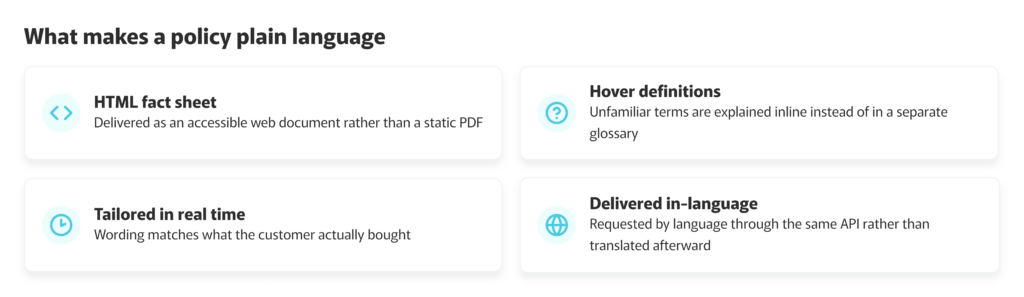
In practice, that means a few concrete things.  Policies are written in plain English instead of legal language. They’re delivered as accessible HTML documents rather than static PDFs, so customers can hover over unfamiliar terms for a quick definition, or jump between sections using sticky navigation instead of scrolling through pages of dense text.

Because the XCover API issues policies dynamically, the specific wording a customer sees is tailored in real time to what they actually bought, not a generic template that covers every possible scenario whether it applies to them or not. The same API also lets partners request policies in whatever language their customers use, so that plain-language treatment carries over regardless of country, instead of just handing them a translated version of English fine print.
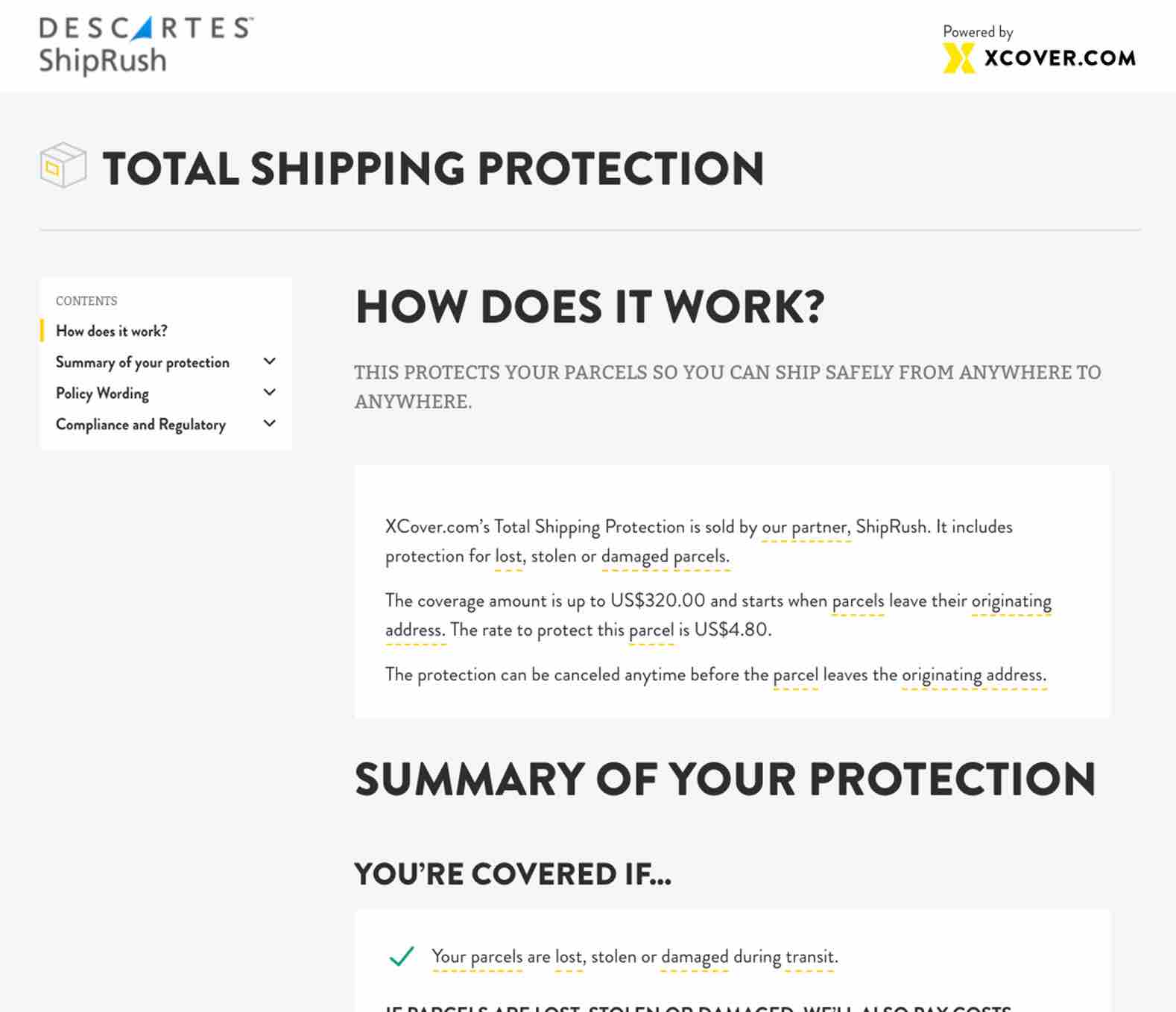
Example fact sheets and coverage terms for selected XCover products

Cover Genius takes the plain-language approach across every product it supports. Each wording is delivered as its own HTML document, easy for both customers and a partner’s support team to find, with the unique reference (“INS” code) used throughout the customer journey and across all API requests.

Every document pairs a plain-English fact sheet with the full wording, and while the examples below are shown in English, partners can request any of them in another language through the same API.

Shipping Protection (US). Partner: ShipRush

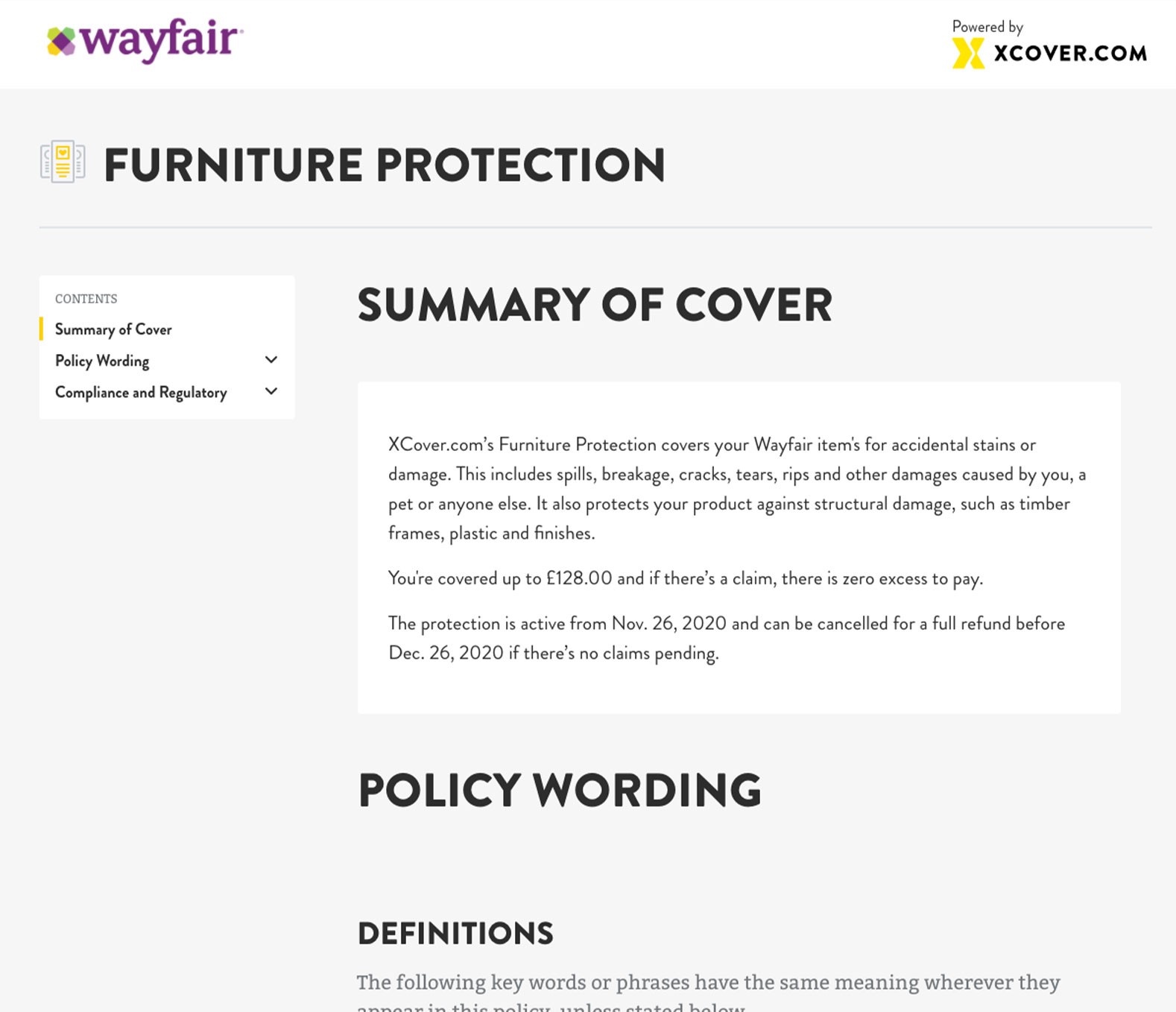
Furniture Protection (UK). Partner: Wayfair

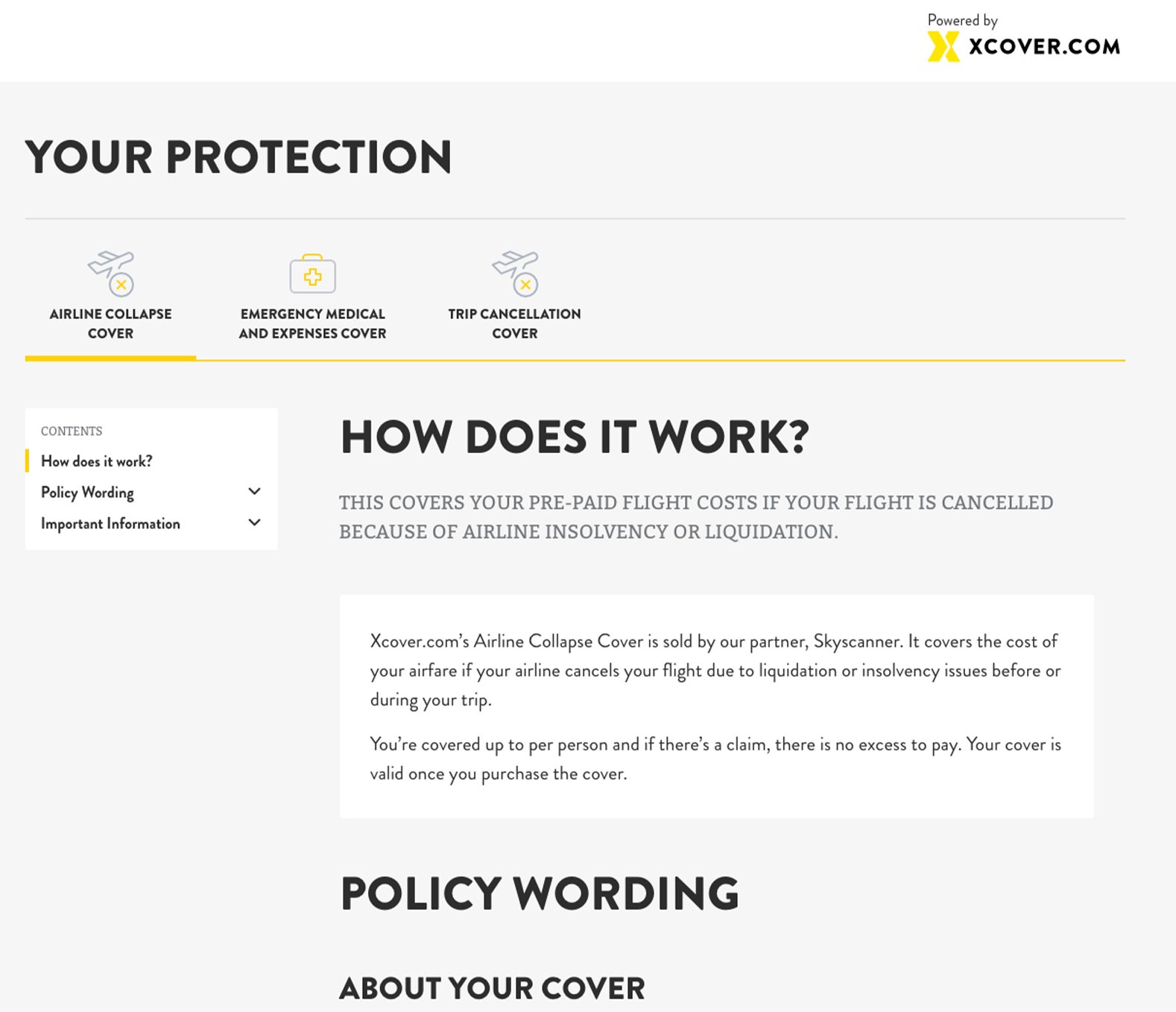
Travel Protection (sold as a bundle). Partner: Skyscanner

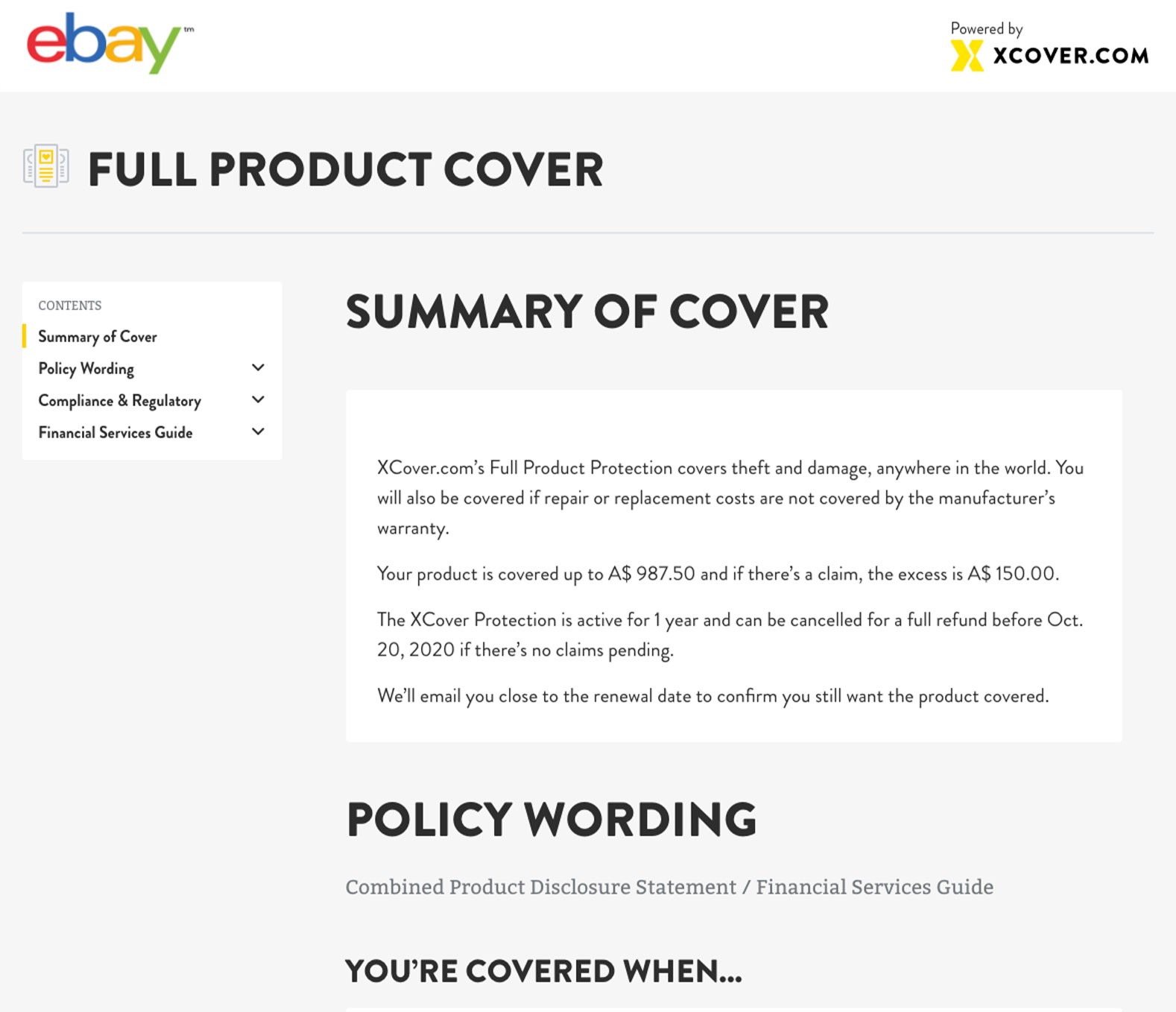
Electronics Protection (Australia). Partner: eBay

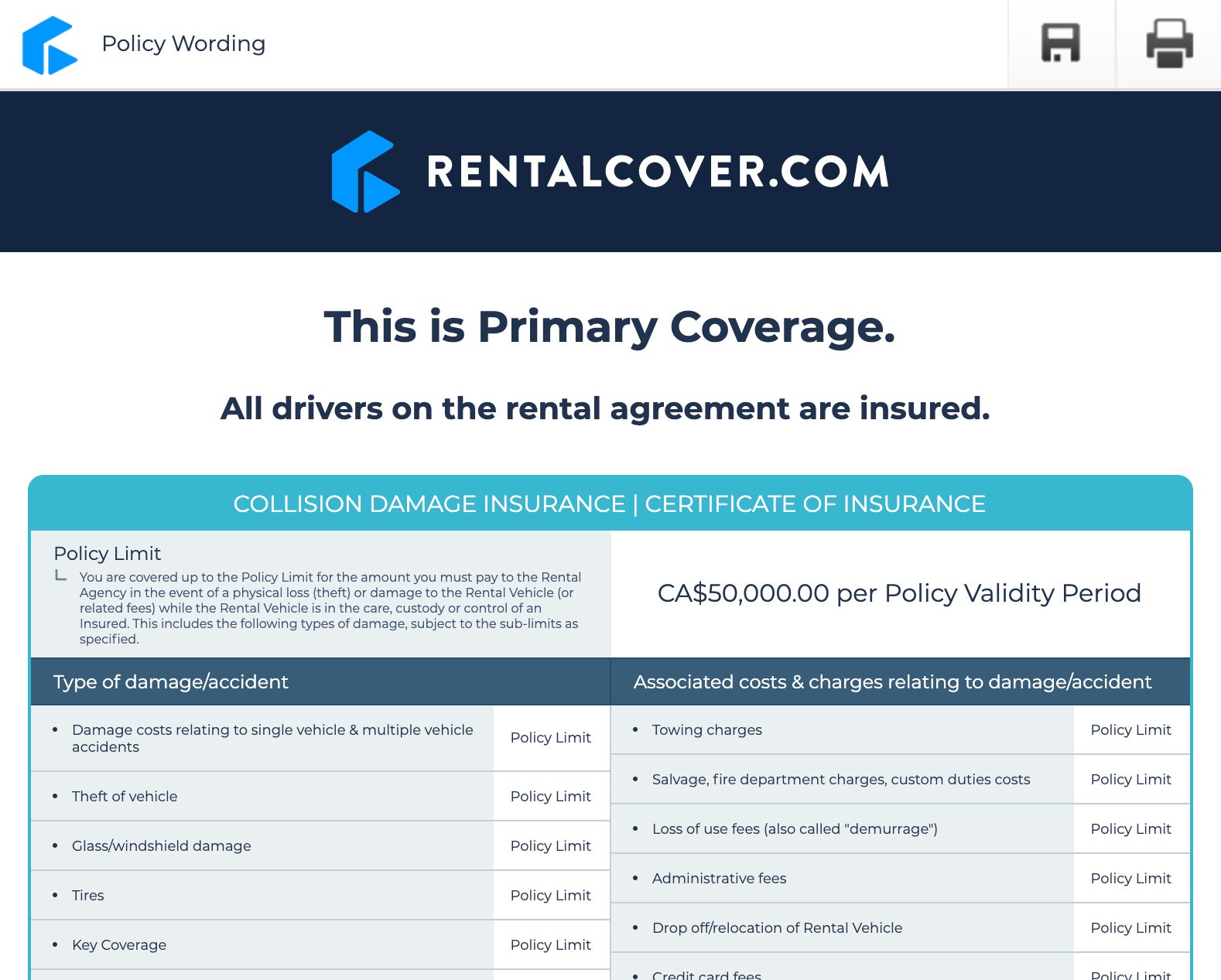
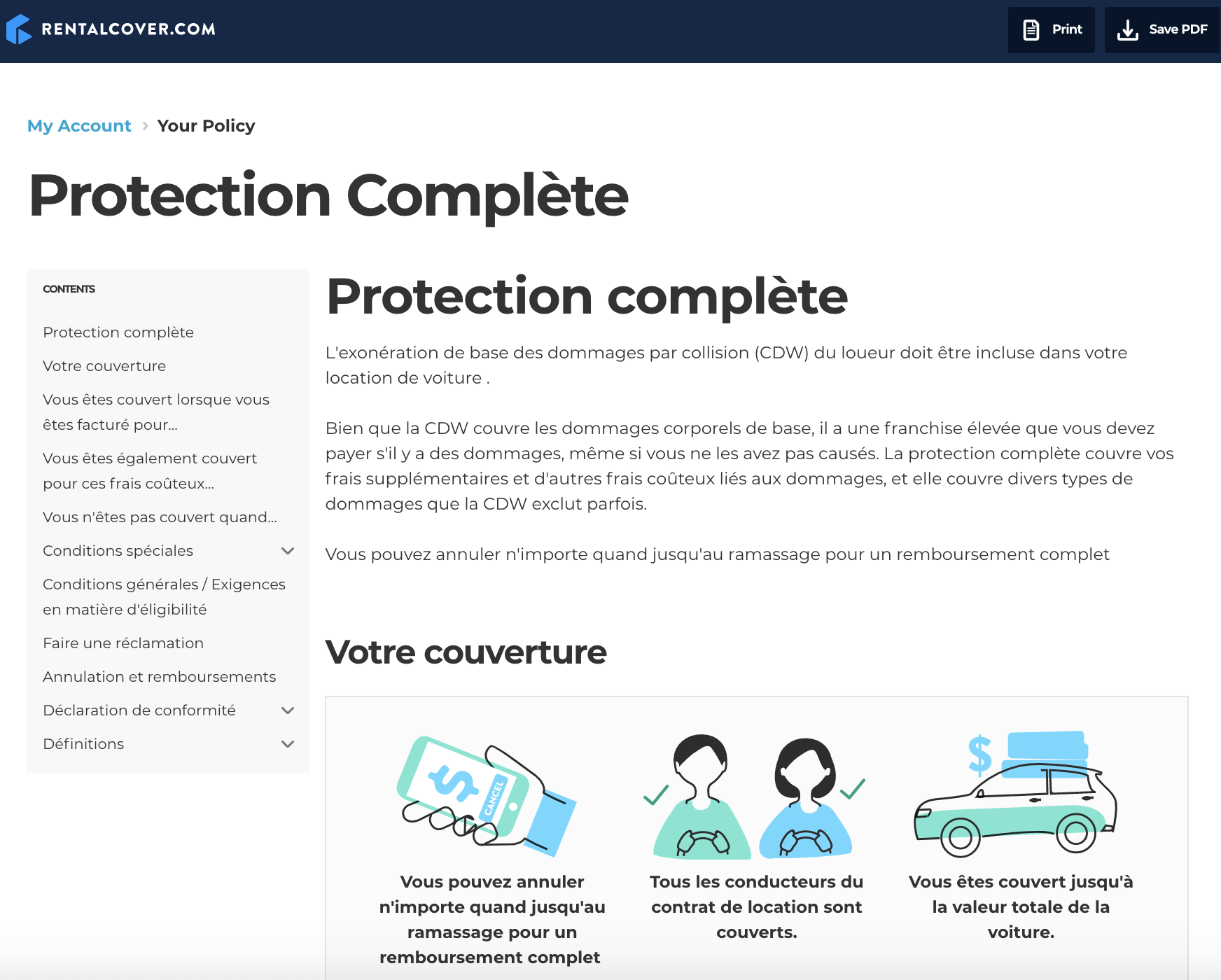
Example fact sheets and coverage terms for selected Rentalcover products

You’ll see similar techniques applied for our car rental insurance partners. Our RentalCover API has dozens of partners around the world accessing over 50 products that cover every source, destination and unique product requirement. 

Clarity matters most at claim time

Plain language pays off well beyond the moment someone first receives a policy. A customer who has to file a claim is already dealing with something going wrong, a lost package, a cancelled flight, a damaged item, and the last thing that moment needs is confusion about what’s actually covered.

Cover Genius pairs plain-language policies with a fast, digital claims process, so the same clarity that makes a policy easy to understand up front carries through to how a claim actually gets resolved.

That combination, a policy someone can actually parse and a claims process that doesn’t require a phone call to a support line, is what turns insurance from a source of disputes into something that builds trust in the platform selling it.

Built to work across languages and markets

None of this is a one-off effort applied to a handful of flagship products. Cover Genius issues plain-language fact sheets and wordings across dozens of partners and product categories, from shipping protection to product warranties to travel cover, adapted for the specific regulatory and language requirements of each market.

In the US, where policy language is filed with regulators, that means building fact sheets that meet filing requirements while still using accordions, hover definitions, and sticky navigation to keep the document usable. Elsewhere, it means the same plain-language approach delivered in the customer’s own language, requested automatically through the API rather than added as a separate step after the fact.

Why this matters for platforms

Every platform that sells protection is putting its own brand behind whatever policy language a customer receives. A confusing policy doesn’t just create a bad experience, it creates disputes, complaints, and support tickets that land on the platform’s own team. Understandable insurance shifts that risk in the other direction.

A customer who understands what they bought is more likely to trust the purchase, less likely to file a support ticket asking what a term means, and more likely to have a smooth experience if they ever need to make a claim. That’s a better outcome for the customer and a lighter operational load for the partner selling the coverage.