
Blog
Embedded Protection
How Do Generations Differ When Purchasing Protection?
- 8 min read
IN THIS ARTICLE
It’s confirmed: every generation thinks about risk before they buy protection.
A new survey from Cover Genius and Gather of 1,392 consumers found that across all generations, 87% weigh what could go wrong before they book travel or make a purchase, and 81% engage seriously when protection is offered at checkout.
The appetite for protection is close to universal, but each generation differs on how they approach buying it. A Gen Z shopper and a Boomer cardholder might both be thinking about risk, but they diverge sharply on what convinces them to buy protection, what makes them trust an offer, and what price they will pay for it. Here’s how each generation thinks about protection.
Understanding of coverage decreases among Boomers
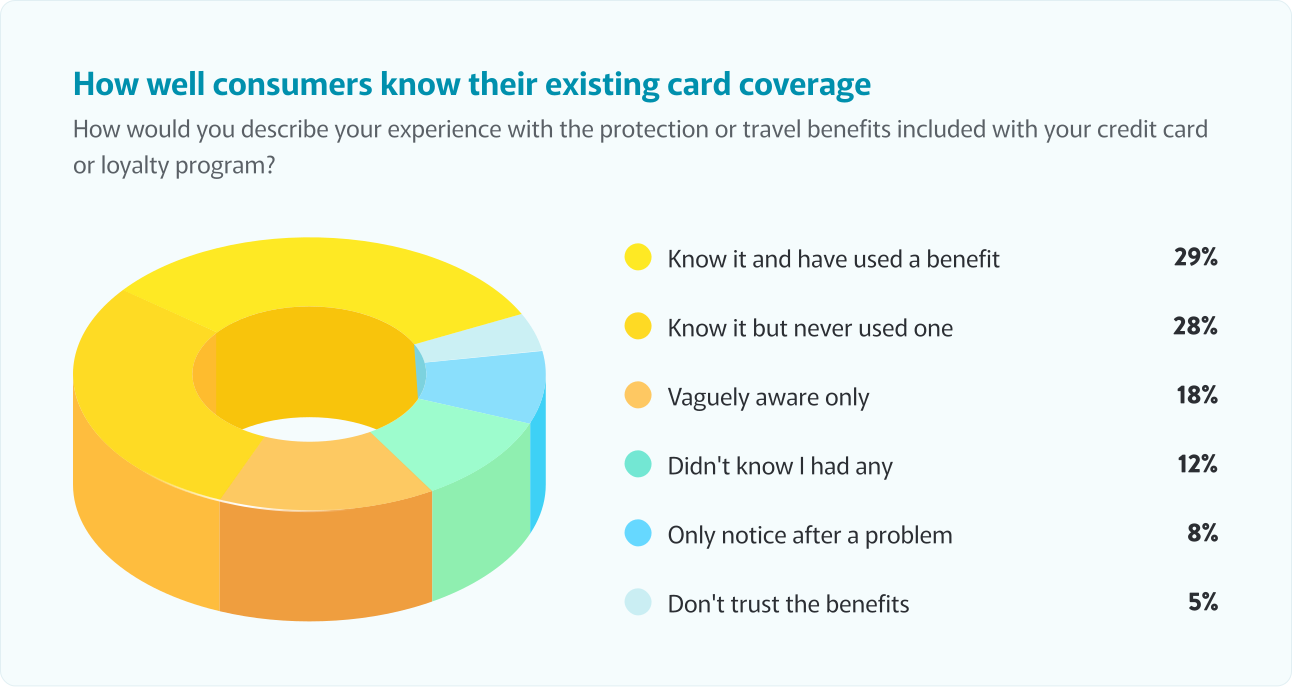
Although most consumers are concerned about risk, 43% of consumers don’t fully understand the coverage they already own, either because they are only vaguely aware they have benefits, don’t know they have any, or don’t trust them.
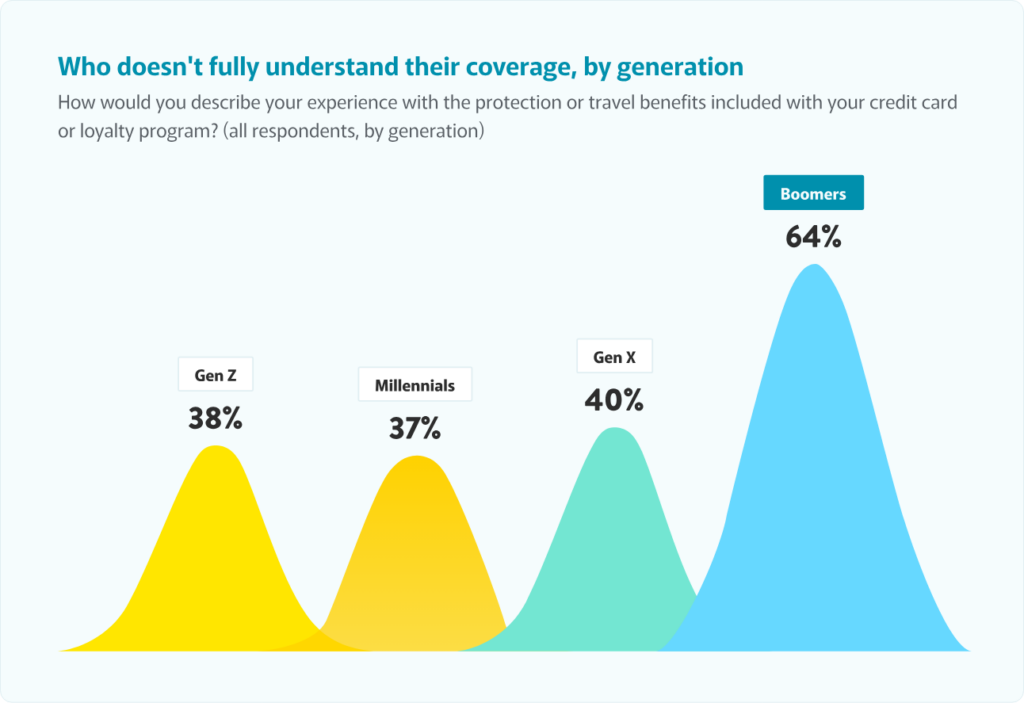
This includes a substantial chunk of Gen Z, Millennials, and Gen X customers, with an average of 38% across these three generations. This number is skewed by Boomers, the majority of whom don’t fully understand their coverage (64%), meaning they are the hardest customers to reach and the ones sitting on the most unclaimed value. To help customers understand exactly what they bought, use understandable, plain language in protection policies to build trust in the purchase and create a smoother claims experience if something goes wrong.
Most generations prefer automatic payouts, but older generations still prefer human-centric claims processes
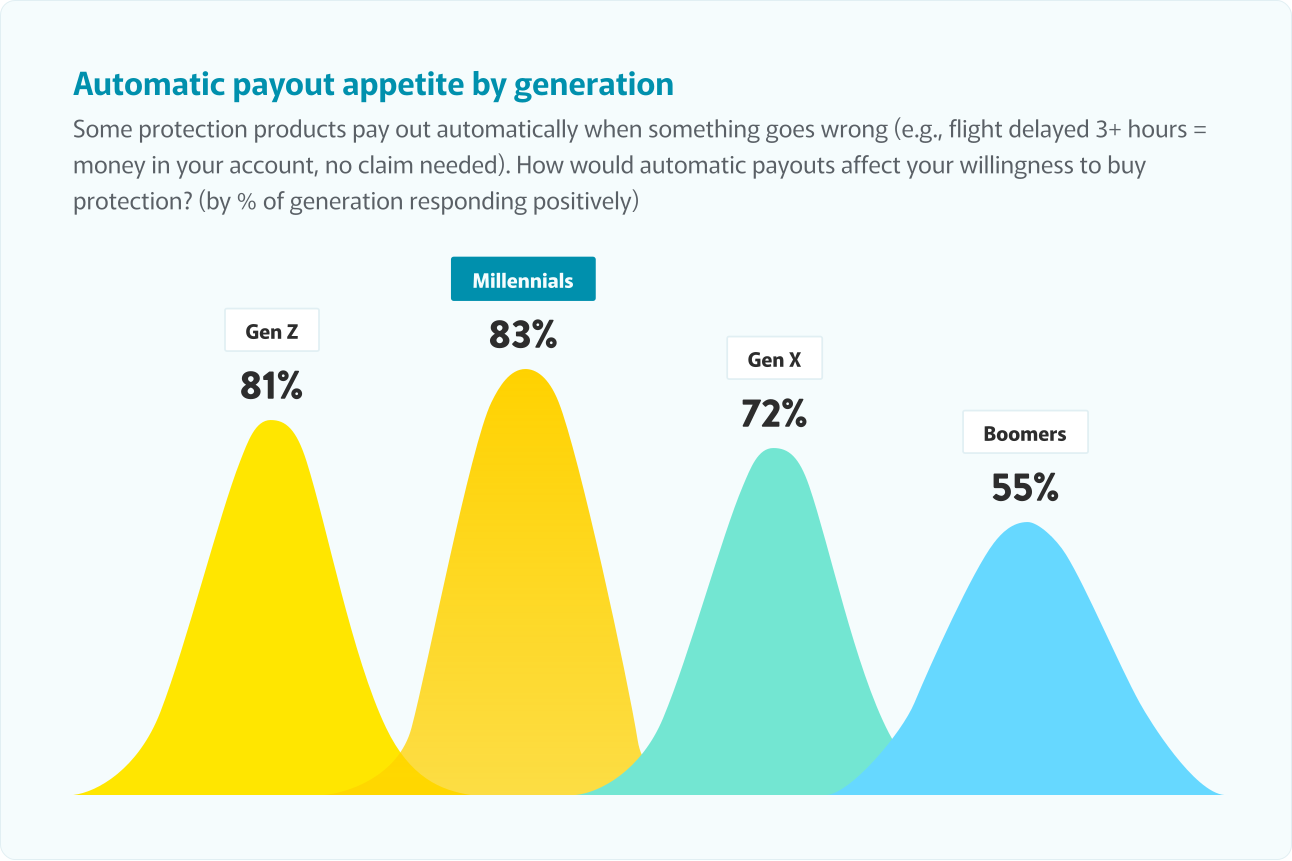
All generations show interest in automatic payouts, with Millennials leading at 83% and Gen Z close behind at 81%. Ensure claims are as fast and easy as possible for these younger generations, without involving paperwork or manual processes. Meanwhile, the convenience of automatic payouts still appeals to Boomers (55%), but much less than younger generations. This cohort is used to traditional claims methods such as phone calls or forms, and they still prefer a human touch when resolving issues.
Younger generations want hyper-personalization
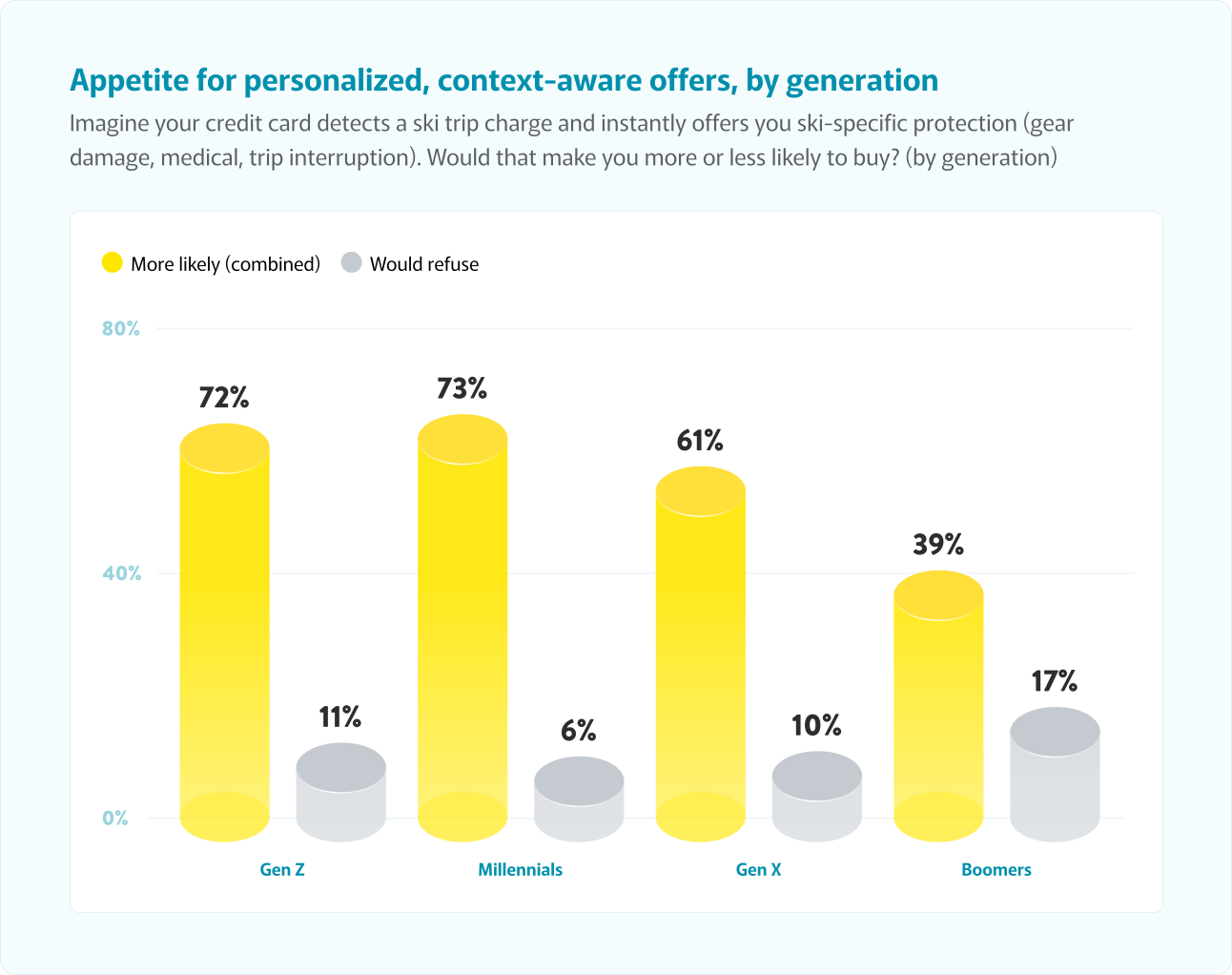
Millennials are the generation most interested in hyper-personalized protection offers (72%), followed by Gen Z (73%). These generations are more willing to leverage their data for more relevant protection suggestions, with larger gaps between those who are more likely to purchase personalized protection and those who would refuse. Gen X, sitting at 61%, is open but may be more concerned about data privacy and the reliability of new technology. Meanwhile, only 39% of Boomers are interested in personalized offers. 17% refuse them outright, the highest number of any generation, likely due to perceived surveillance. For older generations, offers that respond to the moment of purchase (for example, a flight booking) are more likely to resonate with the customer than offers based on stored personal data.
Most generations are open to AI-assisted purchasing, with limits
Gen Z and Millennials are most open to AI-assisted purchasing, suggesting younger generations are more comfortable with technology that makes decisions on the user’s behalf to streamline the experience. This tracks with these generations’ interest in personalized protection. Platforms interested in building or enabling AI assistants in their purchase flow should target these generations first as they have the highest appetite for new technologies.
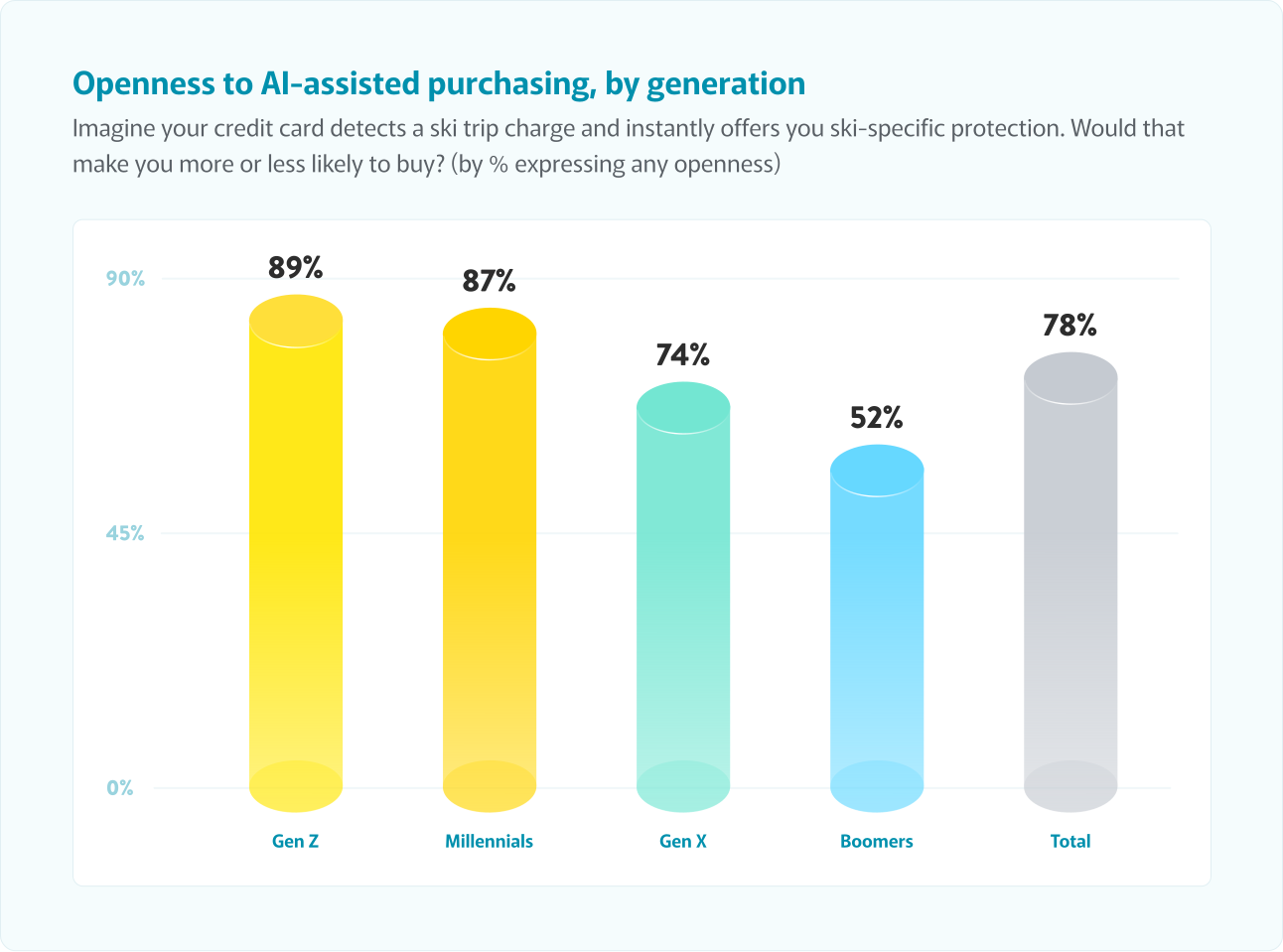
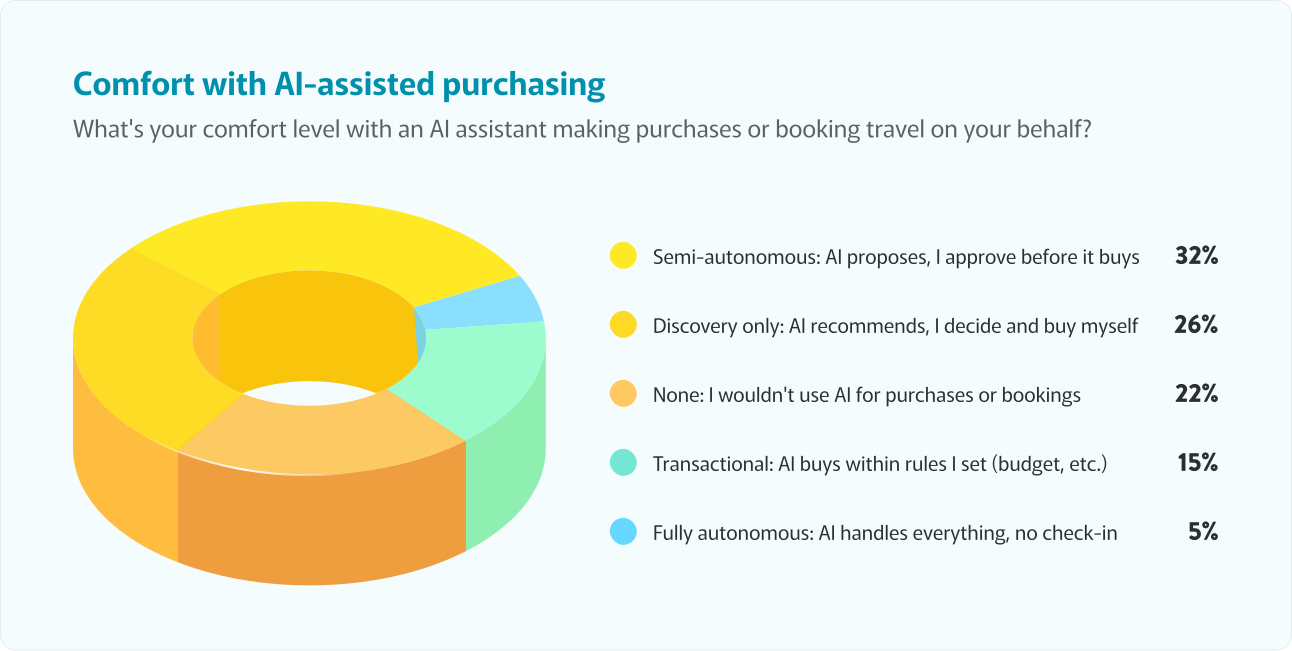
Gen X is open to AI-assisted purchasing (74%) but strongly prefers a human making the final call (44%). This limit is mirrored across all other generations, with only 5% of all respondents comfortable with AI having full autonomy over a purchase. Consumers like the convenience of AI assistance but don’t want to fully give up their decision-making power. Building in an approval step in the checkout flow will ensure their ability to choose isn’t being taken away from them and provide visibility into the protection being offered.
For Boomers, new features like AI have to prove themselves before they’re trusted. Just 52% are open to it, meaning nearly half aren’t comfortable with AI being involved in the process at all. For this cohort, keep protection offers plainly presented without emphasizing dynamic personalization, even if the technology is still powering the offer on the back end. Framing personalized protection as adaptive or AI-powered risks the offer being perceived as a machine making decisions for the consumer, which Boomers are less likely to appreciate.
Younger generations are willing to pay for premium benefits
Gen Z is twice as likely as Boomers to say they would pay $26 or more a month for protection included in a credit card they use, followed by Millennials, 31% of whom are willing to pay $26 or more a month. These cohorts are willing to pay a median of $20 a month, making them the natural audience for a premium, tech-forward protection tier.
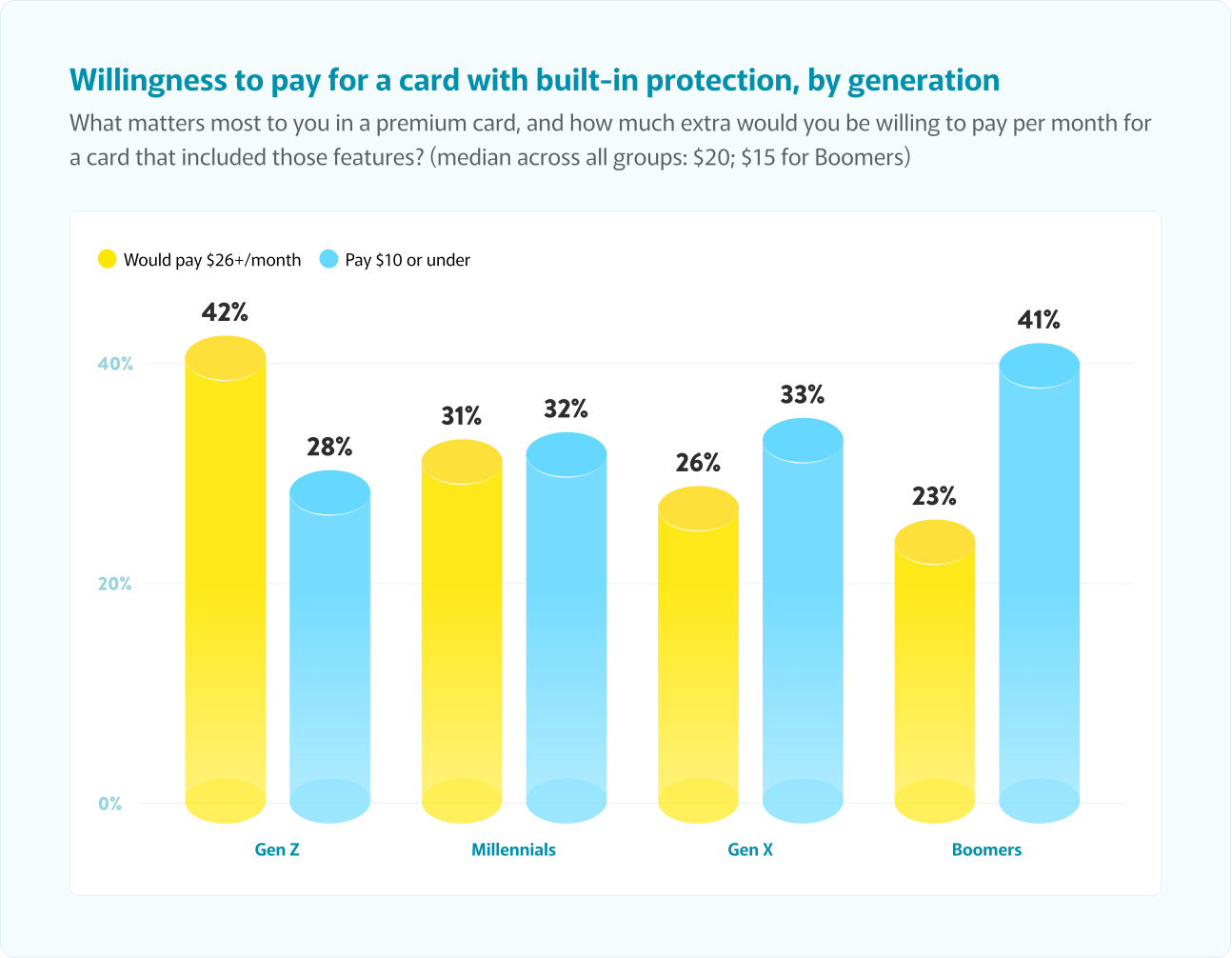
Gen X is less willing to pay for a card with built-in protection. Just 26% of Gen X consumers are willing to pay $26 or more a month, with 33% preferring to pay $10 or less per month. These consumers want to ensure they are truly getting value from what they pay for, so surfacing protection benefits in highly visible touchpoints, such as at checkout or within an app that they’ve made purchases on, will help give them peace of mind.
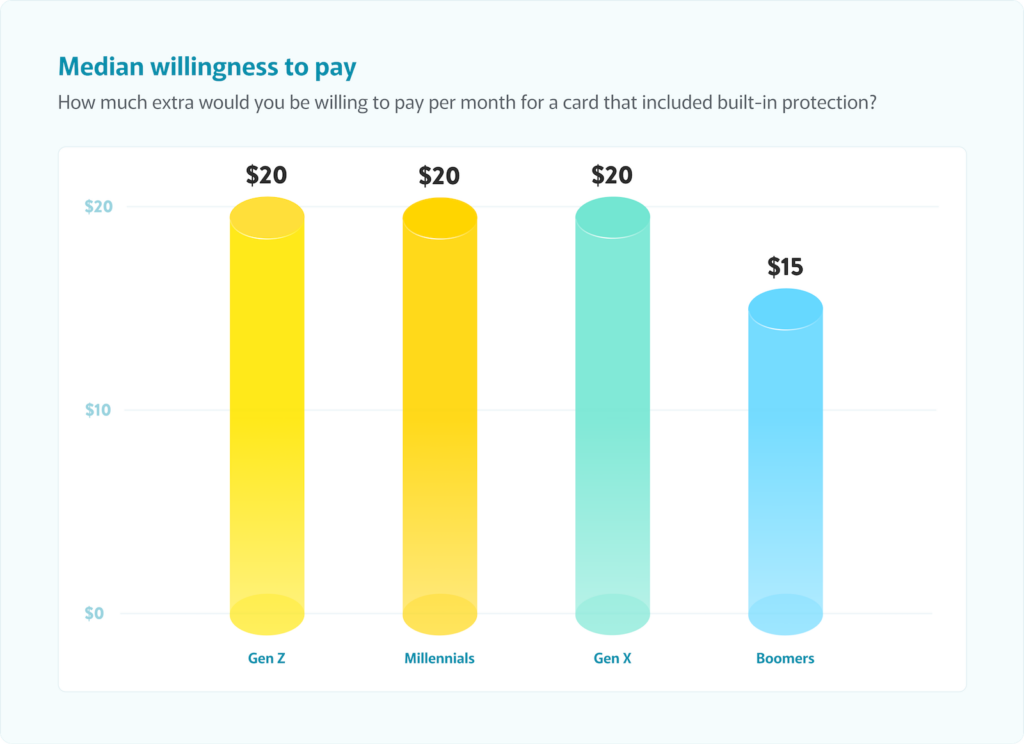
Finally, Boomers have a median willingness to pay $15 per month, $5 lower than any of the other generations. Only 23% are willing to pay $26 or more per month, with 41% preferring to pay $10 or less per month. Much like Gen X, these consumers want to ensure they’re getting value from purchased protection benefits. Since Boomers are also the generation with the least understanding of protection, platforms looking to convert this cohort should price offers modestly and promote plain-language explanations of existing coverage through channels Boomers already trust.
Millennials are the biggest driver behind everyday protection products
Millennials rank highest of any generation across all eight everyday-protection products tested, including online purchases, shipping protection, and extended warranties. Gen Z is particularly interested in covering device theft or damage, while protection from cyber and identity theft protection actually gets more popular with age, hitting 56% for Boomers. Other products drop off. The perceived value of protection for financial hardship or mortgages falls from the 60s among Millennials to the low 30s among Boomers, who are no longer in that stage of life.
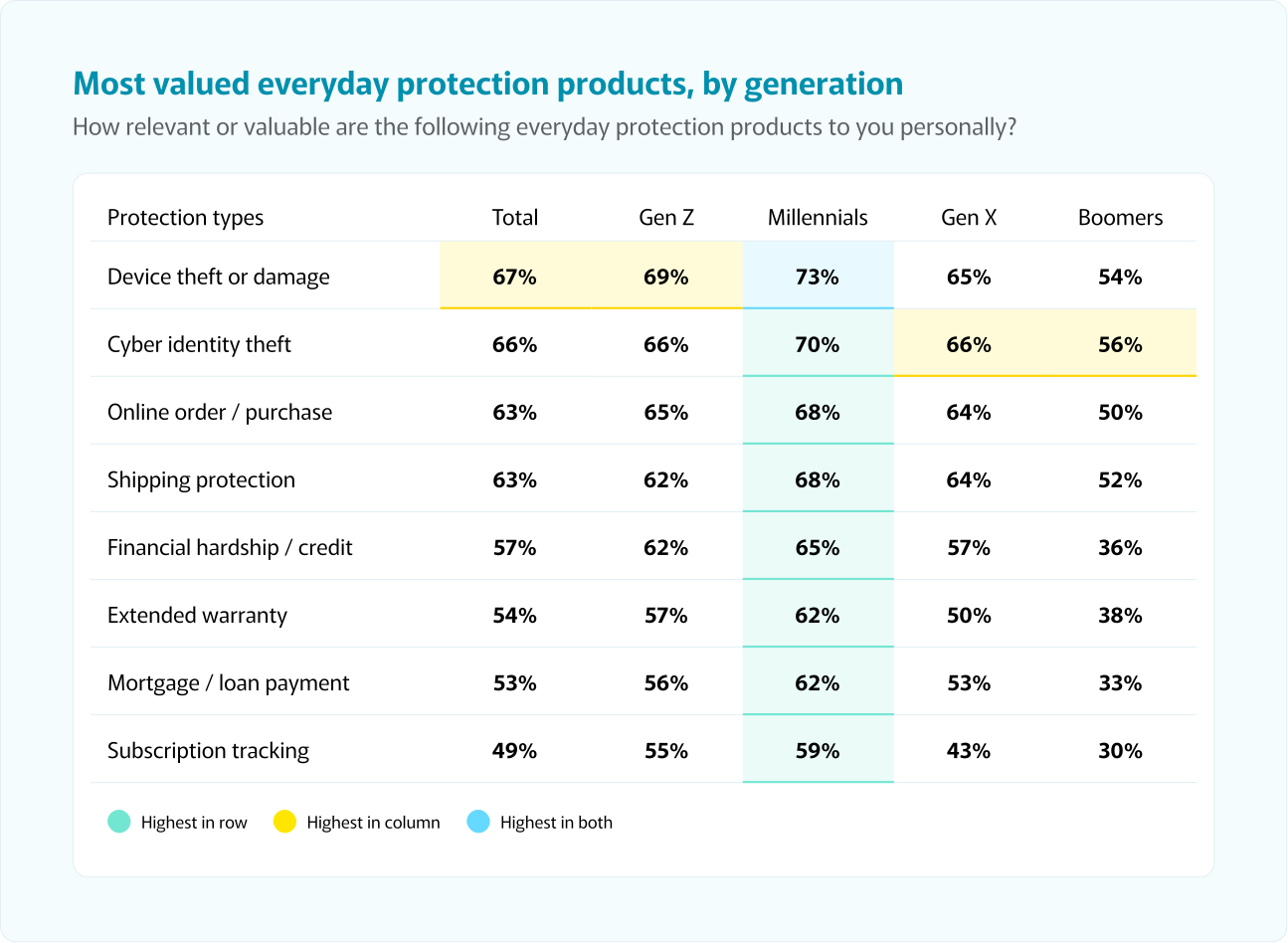
Issuers interested in expanding their portfolios should lead with device, cyber, and shipping coverage across all generations, reserving financial protection products for younger, higher-engagement cardholders.
Younger travelers are willing to switch platforms for protection
Millennial consumers have the highest conviction when switching travel platforms for protection, with 41% saying they would be “much more likely” to move their booking to a platform that offered embedded protection, nearly double compared to the 24% of Boomers who say the same. This generation sees protection as a benefit worth moving for, so for travel platforms looking to engage new Millennial customers, embedded protection is a great way to reach them.
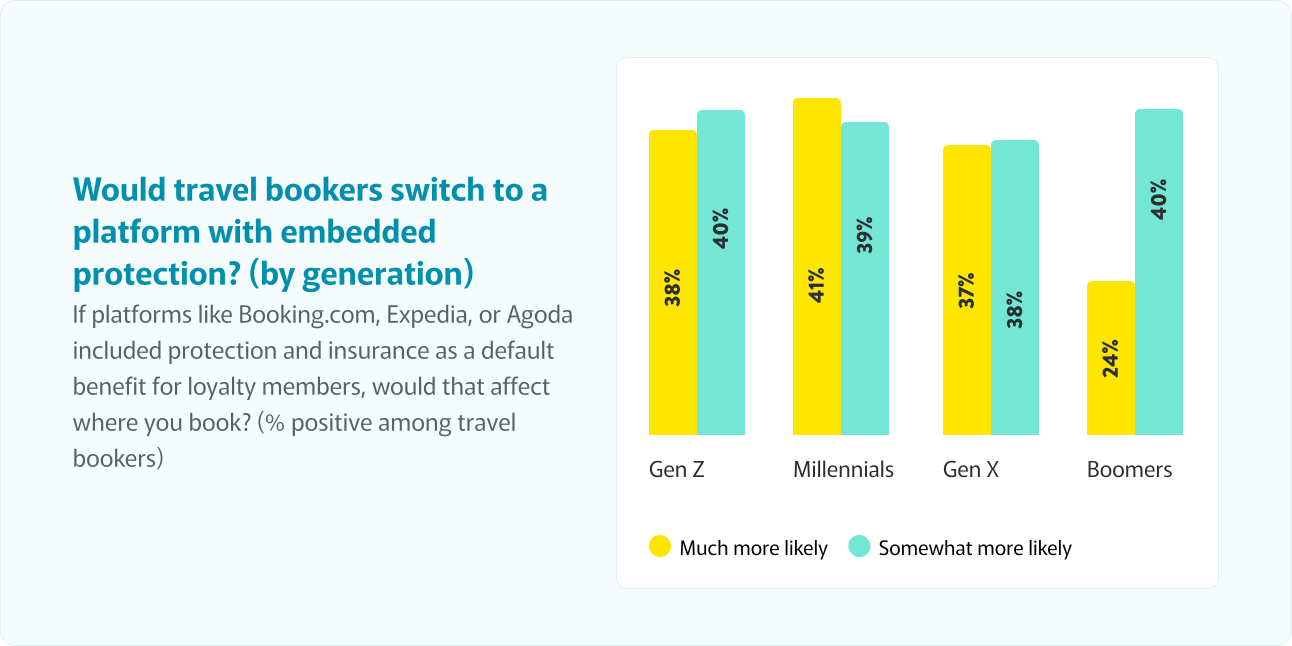
While older travelers aren’t as likely to switch for embedded protection, its presence makes them more comfortable sticking with a platform, so surface offerings at checkout and in account messaging for visibility.
Older generations trust banks yet don’t buy protection from them
Gen X has the highest trust in banks among all generations at 46%, with the percentage of those who trust other platforms falling to 26%. Compared to winning a new customer over, it’s much simpler to engage a customer with established relationships, so Gen X consumers are best reached by embedding protection within existing programs they already use.
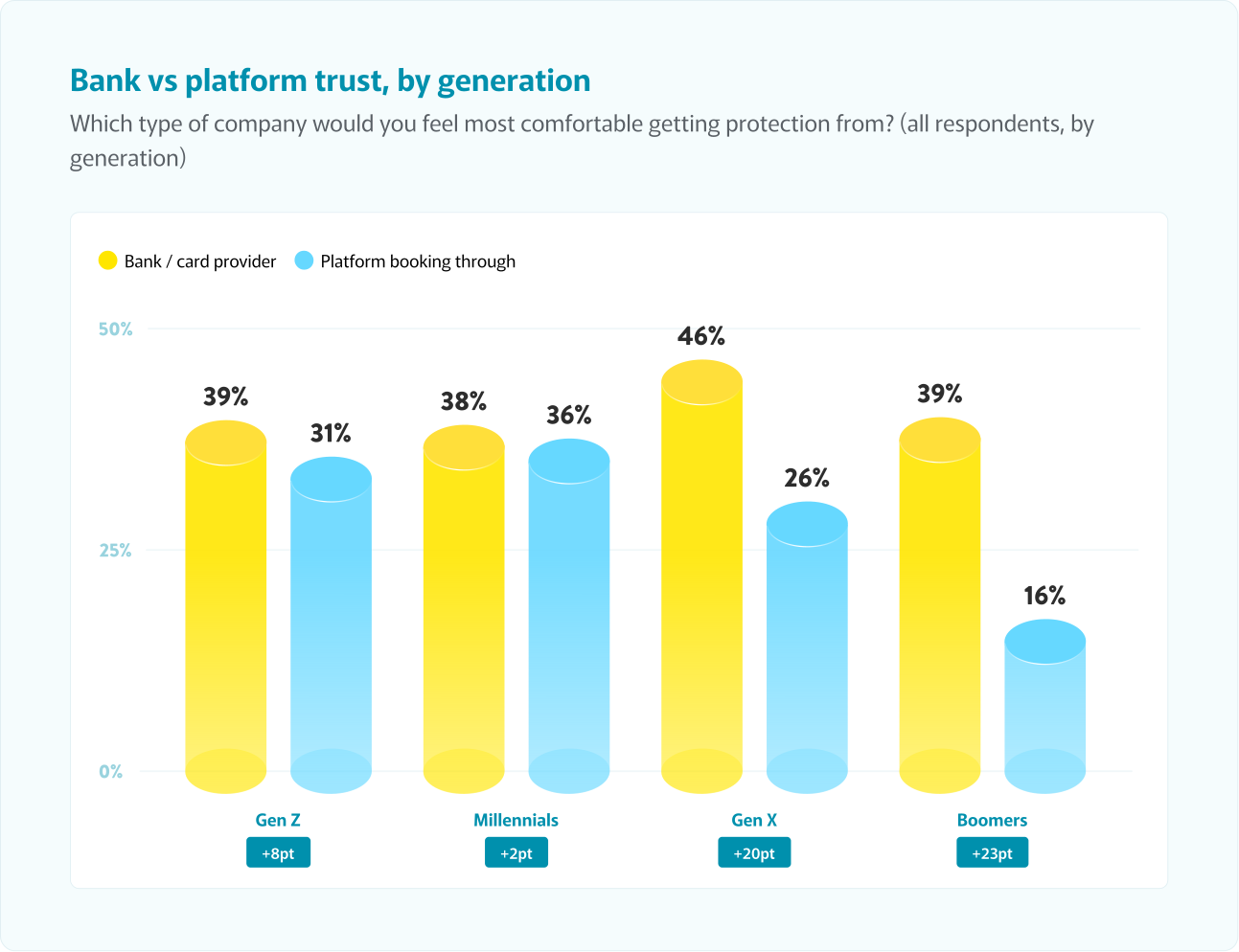
Boomers trust purchasing protection through their banks over platforms more than any other generation, with a 23-point gap, but banks have done the least with that trust. In fact, Boomers are the least likely generation to have bought protection through their bank (14%). To engage this age group, it’s best to offer coverage in plain, understandable language and keep a human claims path available.

Additionally, despite almost equivalent trust in other platforms as banks, 45% of Millennials surveyed, a higher rate than any other generation, already buy protection directly through their bank, which makes them the easiest cohort to expand. Banks can focus on providing their Millennial customers with integrated protection products and simplified claim experiences to build continued loyalty.
Millennials and Gen X are interested in shipping protection
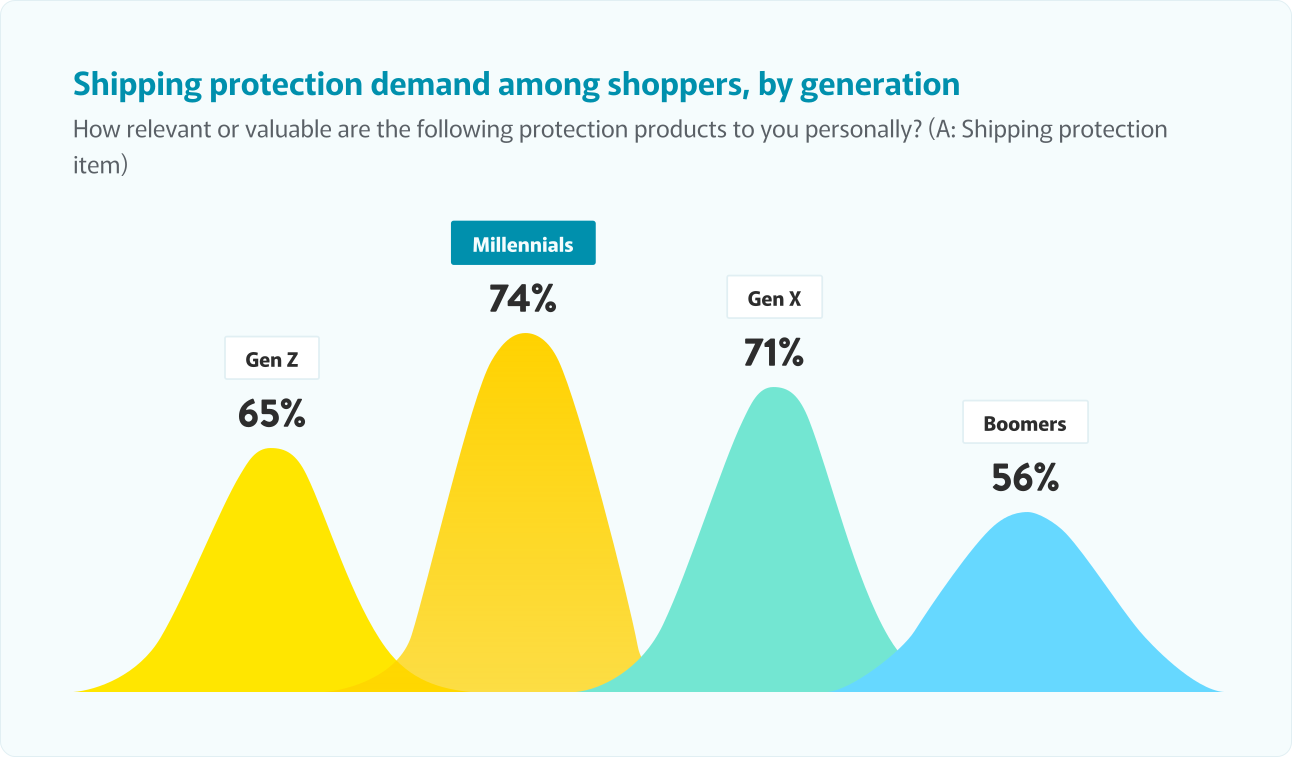
Millennials show the highest demand for shipping protection at 74%, followed closely by Gen X (71%). These are high-frequency online buyers, meaning more opportunities to attach protection to purchases. Shipping protection is one of the biggest drivers of recurring revenue, so issuers looking to expand their portfolio will want to target these consumers by offering protection directly at the point of shipment and framing it as reliability on high-value orders.
To sum it up
Each of these generations have different starting points, priorities, and barriers to engagement. Digital-native Gen Z consumers want AI to leverage their data so they can receive hyper-personalized protection offers. Millennials are willing to accept AI suggestions for personalized offers, but they still prefer to make the final purchase decision on their own. Gen X consumers, who also want tailored offers, like to stay informed about how the offers are assembled, and are best reached in accounts and apps they already use. Boomers, who don’t understand their current coverage, prefer a human in the loop at every step, and require plain language to provide visibility into their protection benefits.
Consumers of all ages are ready for personalized, embedded protection. Is your business ready to deliver?
Read the full 2026 Embedded Protection Report for more breakdowns on protection across travel, banking, and shipping.
Related Articles
Consumers trust their banks the most when purchasing protection. Why aren’t banks taking advantage?
Deblock and Cover Genius Partner To Build Protection Into Everyday Banking
Bancassurance Market Report: Trends Shaping Bank-Distributed Protection
Get in touch
All we need is some quick background info to understand how we can best help.