
How e-Commerce Retailers Can Drive Loyalty Through Smart Insurance
Online retail is a crowded fight for customer loyalty. Global e-commerce sales are on track to reach $6.88 trillion by the end of 2026, with e-commerce accounting for 20.5% of global retail sales in 2025 and projected to climb to 22.5% by 2028, according to Shopify’s 2026 ecommerce data, citing eMarketer.
With that much money in play and switching costs close to zero, retailers are constantly hunting for a genuine differentiator. Smart insurance, delivered at the point of purchase, is one of the few checkout moments most retailers still haven’t figured out how to use.
The tech-savvy shopper
Getting a shopper to check out at all is still the first hurdle. The average cart abandonment rate sits at 70.22%, according to Baymard Institute’s 2026 research, meaning roughly 7 out of every 10 shoppers who add something to their cart never complete the purchase. Unexpected costs and a lack of trust in the transaction are consistently among the top reasons shoppers cited.
That trust gap isn’t only about price. Most shoppers have no idea what happens if a package gets lost, arrives damaged, or turns out to be the wrong size until it actually happens to them. That uncertainty alone is often enough to make someone hesitate at checkout, or abandon it entirely.
The right kind of smart insurance
Retailers can’t close that trust gap with the same one-size-fits-all policy they might have used a decade ago. Smart insurance means policies written in plain English rather than legal language, personalized to the specific product, the specific customer, and their language, currency, and platform of choice.
To do that well, an insurance platform needs to dynamically bundle policies from multiple underwriters and categories into a single, coherent offer, and price it dynamically so the right offer reaches the right shopper at the right moment.
Claims that build loyalty, not lose it
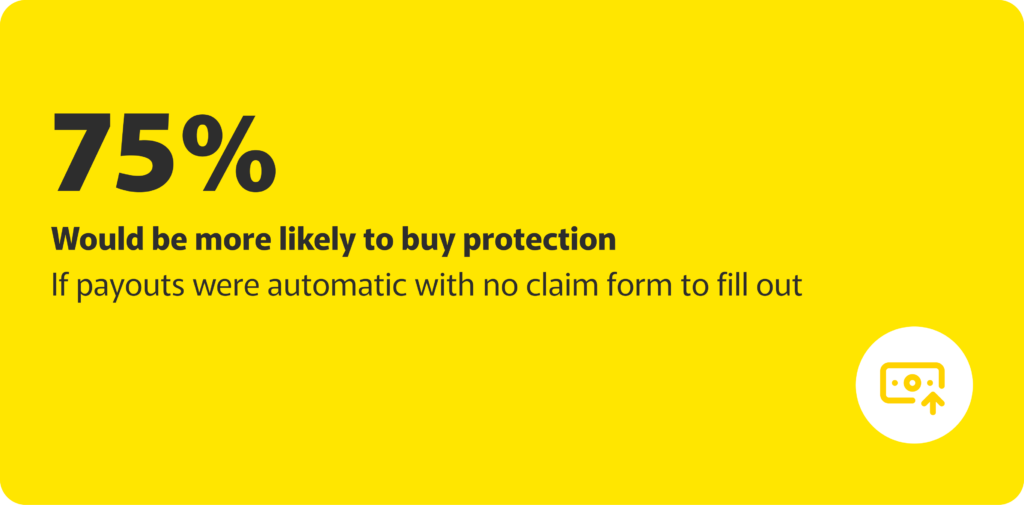
Claims are where insurance has traditionally done the most damage to a brand relationship, and it’s exactly where smart insurance can do the opposite. Cover Genius’s own consumer research found that 75% of people would be more likely to buy protection at all if payouts were automatic, with no claim form to fill out. Retailers that let a claim resolve automatically, or offer the option to settle in store credit, turn what used to be a moment of friction into a reason to come back.
Why smart insurance earns loyalty
The case for smart insurance follows the same logic retailers already trust for reward points and free shipping, just applied to a checkout moment almost nobody has personalized yet.
A shopper who has a good experience with protection, one that’s relevant, easy to understand, and easy to use if something goes wrong, comes away trusting the retailer a little more, not just the insurance. That trust is what brings them back to buy again, rather than starting their next search from scratch with a competitor.
Building it into the brand, not adding it on top
None of this works if the insurance feels like a separate product wedged into checkout. Smart insurance needs to sit inside the point of sale via API, match the tone of the rest of the brand, and feel like a natural part of the purchase rather than an awkward add-on. Retailers already know how to do this with short delivery windows and free returns. Smart insurance is simply the next service worth getting right, and one of the few that most competitors still haven’t touched.
The retailers who figure this out first won’t just see fewer abandoned carts, they’ll build the kind of loyalty that’s hard for a competitor to copy with a discount code. Protection is still one of the last checkout moments left to personalize, and the retailers who treat it as part of the brand experience, not paperwork, are the ones who’ll turn a one-time purchase into a repeat customer.