
Blog
Travel
What Travel Companies Should Know: Top Findings from the 2026 Embedded Protection Market Research Report
- 6 min read
IN THIS ARTICLE
Travelers already want protection. What travel platforms haven’t figured out is how to deliver it in a way that actually converts customers.
Cover Genius and Gather surveyed 1,392 consumers across seven countries for the 2026 Embedded Protection Market Research Report, mapping how travelers actually think about risk, what they want covered, and what would change their booking behavior. Here’s what travel companies should know about embedded protection.
1. Protection works great as a default loyalty benefit
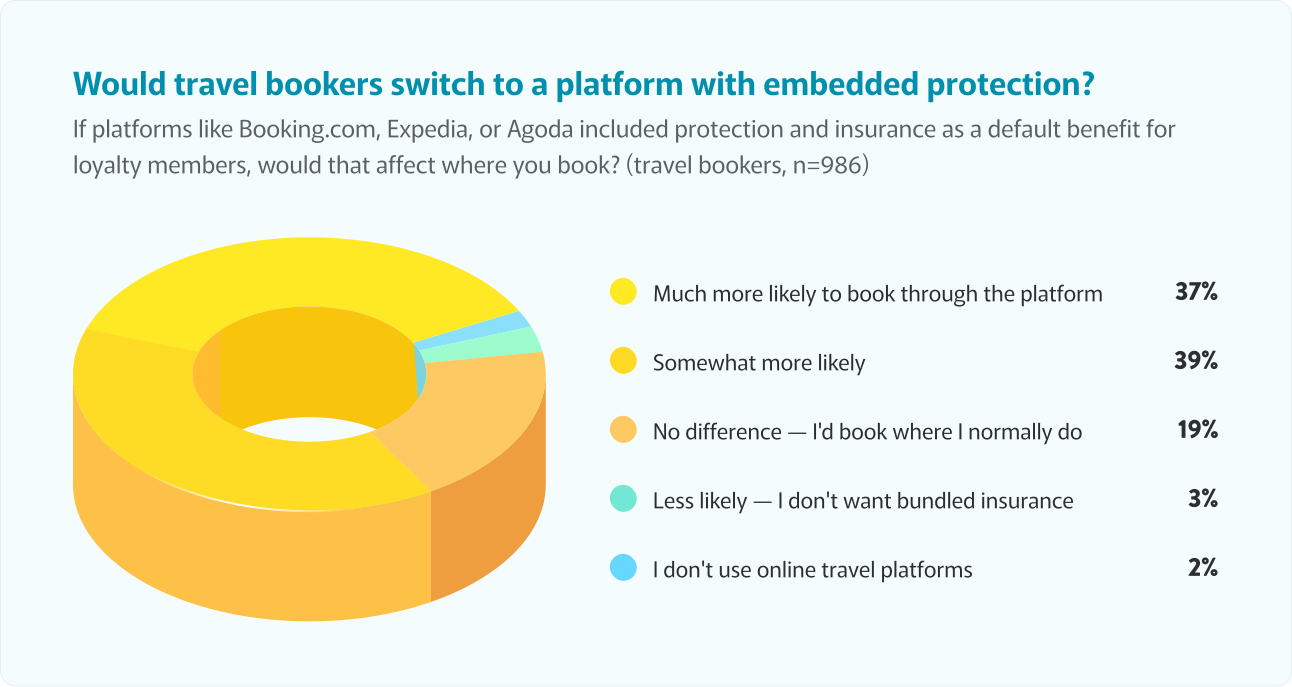
76% of travelers who use online travel platforms say they would be more likely to book with a platform that made protection a default part of the experience. Only 3% said they would be less likely to, and the other 19% were indifferent rather than opposed. For a travel platform considering an update, the data suggests limited downsides to adding protection within the checkout flow.
Although consumers of every generation are willing to switch platforms for embedded protection, younger generations are more likely to actively move their bookings to get it. Millennials showed the strongest reaction, with 41% saying they would be much more likely to switch platforms for a booking that included protection by default. Boomers were far more measured in their approaches, with just 24% much more likely to switch platforms for embedded protection. They are less likely to change booking behavior based on protection alone, even though they may still value having it.
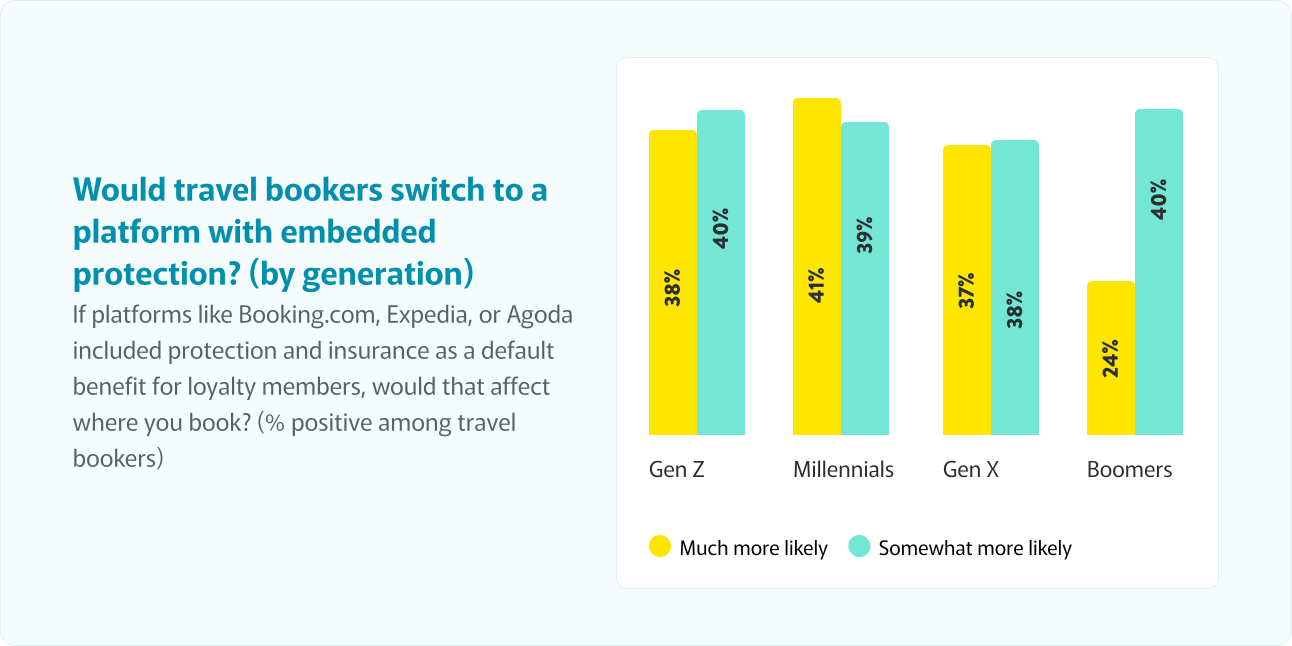
Travel platforms can build protection into the default booking flow with limited risk, but they should be thoughtful how they present their offerings. Younger travelers may respond to protection being marketed prominently as a new advantage, while older travelers may be better served by a lower-key presentation, with offerings surfaced quietly in the existing checkout and account experience.
2. Travelers prioritize emergency medical coverage
When asked to rank protection options for a trip, travelers do not treat every product as equally important. Emergency medical coverage ranks first, with 76% of travelers valuing it highly, ahead of trip cancellation (73%) in second place. Lounge access, weather protection, and event coverage all cluster near 50%, options that travelers find useful but do not rank as priorities.
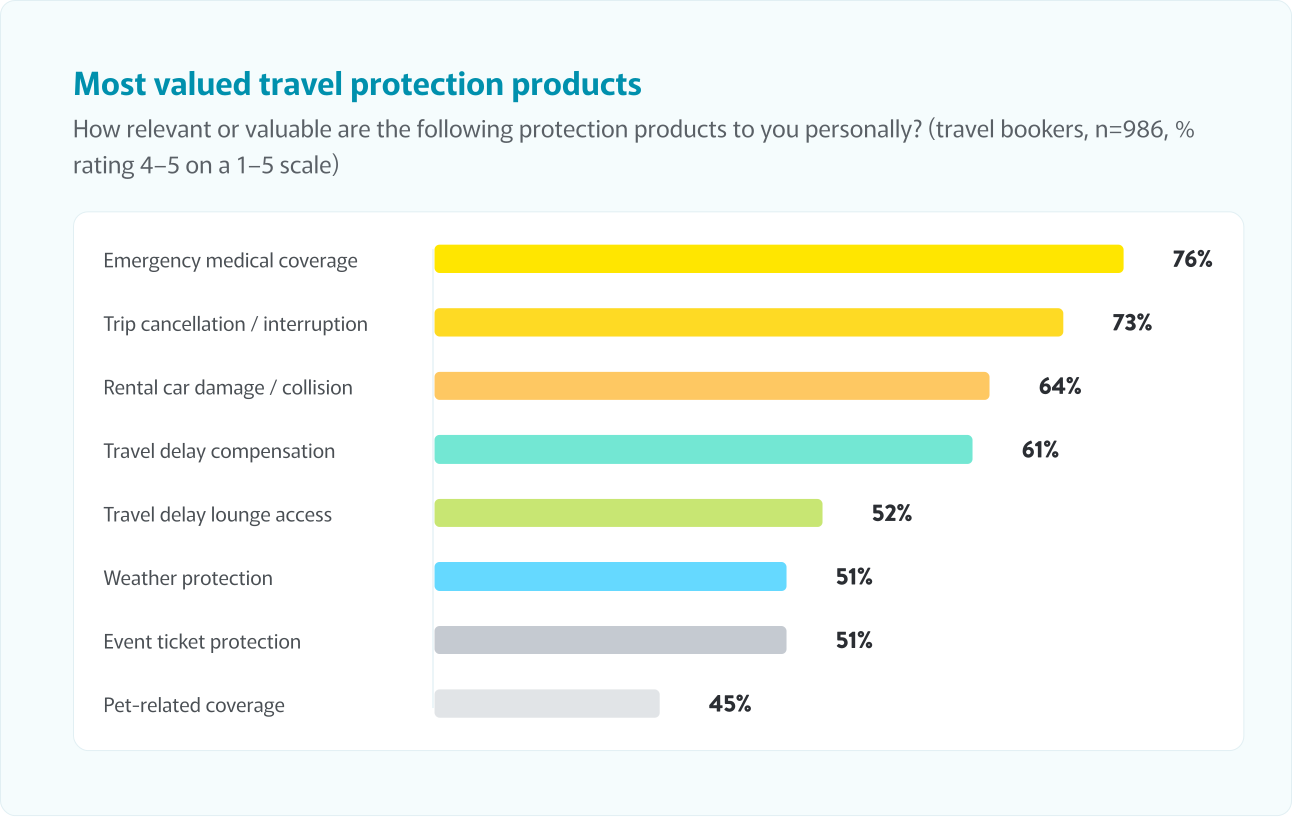
Platforms should consider this in their checkout design. Showing multiple coverage options, all with equal weight, forces travelers to sort through them on their own, causing decision-fatigue at a critical point of conversion. Instead, consider leading with emergency medical and trip cancellation and hiding the other options within a drop-down menu.
3. Automatic payouts are the single strongest purchase driver
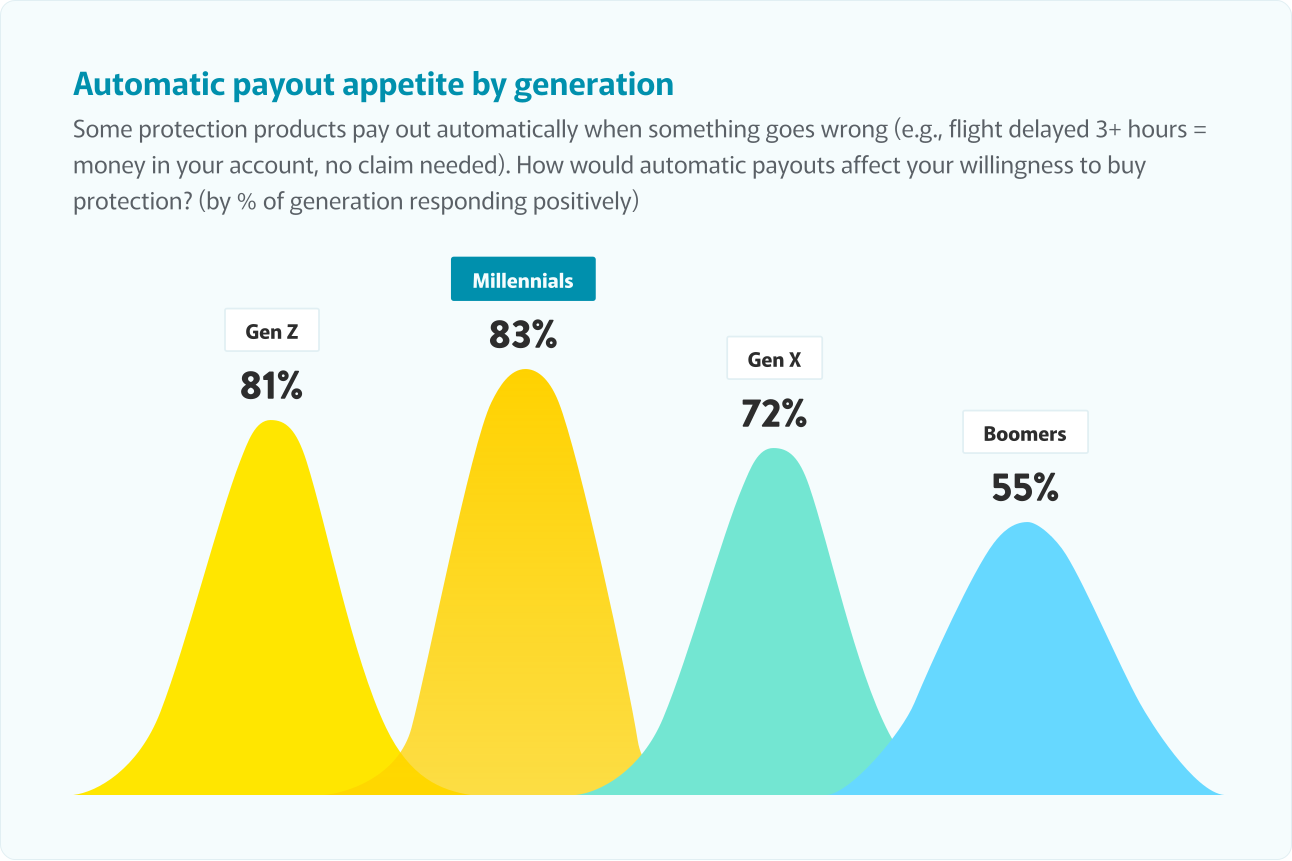
Automatic payouts outperformed every other factor in the study. Traditionally, when something goes wrong, the process of filing a claim, providing documentation, and waiting for an outcome is filled with friction. A payout that triggers automatically, without the need for a claim form or call, removes the moment that causes the most friction and the most lost trust.
Making the claims process easier leads to more conversions. 75% of consumers said they would buy more protection if payouts were automatic, and 71% said they would switch platforms to get it.
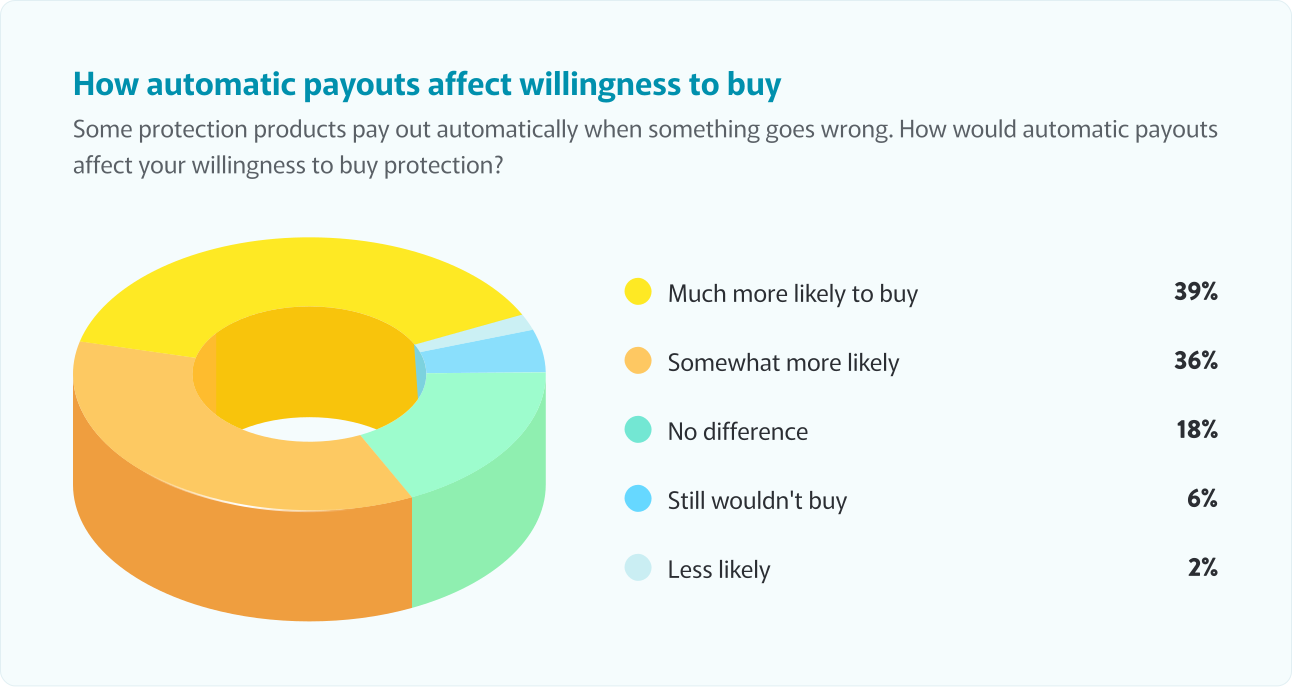
Younger consumers show a stronger preference for automatic payouts than older generations, though the appetite for instant claims remains present across every age group. Travel platforms weighing where to invest next may want to consider automatic payouts, but for Boomers, who prefer traditional claims methods such as phone calls or forms, it may be better to leave a human element to the claims process.
4. Travelers are open to AI, but not to full automation
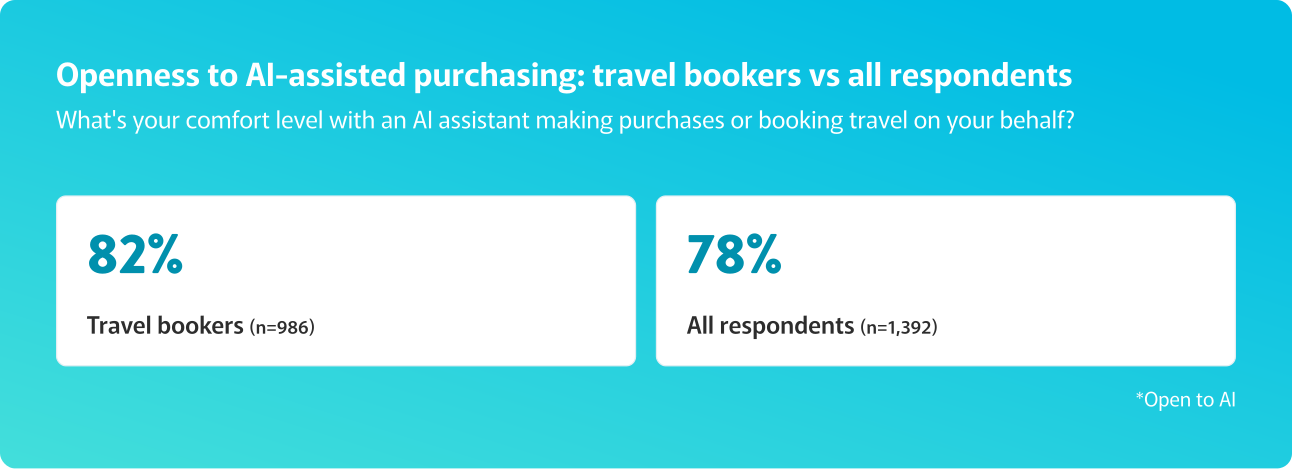
AI-assisted booking is moving faster in travel than in most other categories. 82% of travel bookers say they are open to using AI for purchasing decisions, compared with 78% of consumers overall.
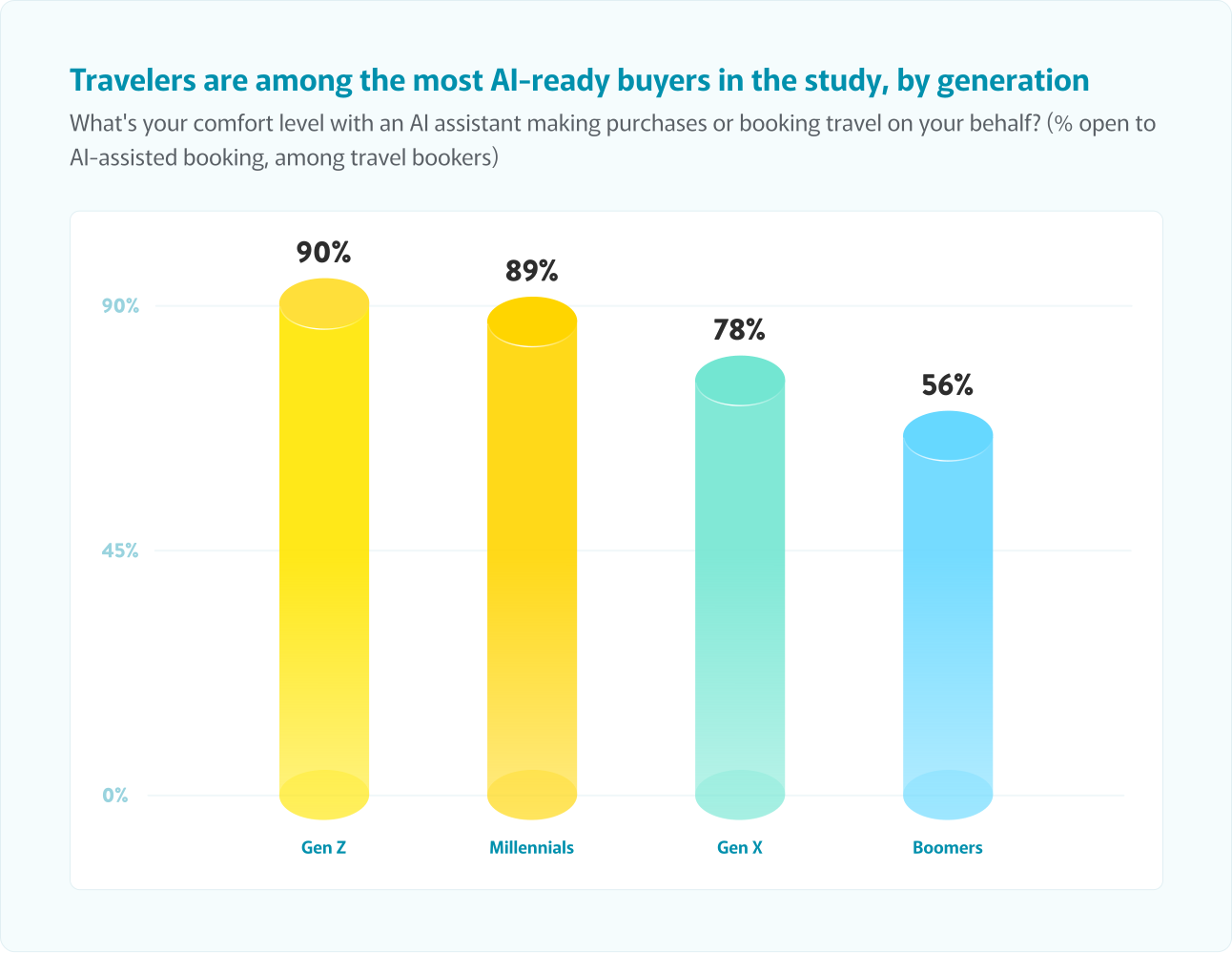
Gen Z lead in the rankings, with 90% open to AI-assisted booking, while Boomers lag behind at just 56%. To fully engage different customer segments, travel platforms should tailor their presentation of AI-powered, personalized offers by generation. Younger generations want their data to be leveraged for hyper-personalized protection and are more excited about this new technology. For older generations who are more uncomfortable with perceived surveillance, framing personalized protection as AI-powered will prevent them from converting. Instead, offer relevant protection to their travel needs but let them make the final decision at checkout.
Although consumers are willing to let AI search, compare, and recommend options, 95% still want a human to make the final call on adding protection. A booking flow that can pause at the moment of purchase, surface a tailored recommendation, and get approval in one step, rather than redirecting elsewhere, will resonate better with the majority of travelers than a fully automated process.
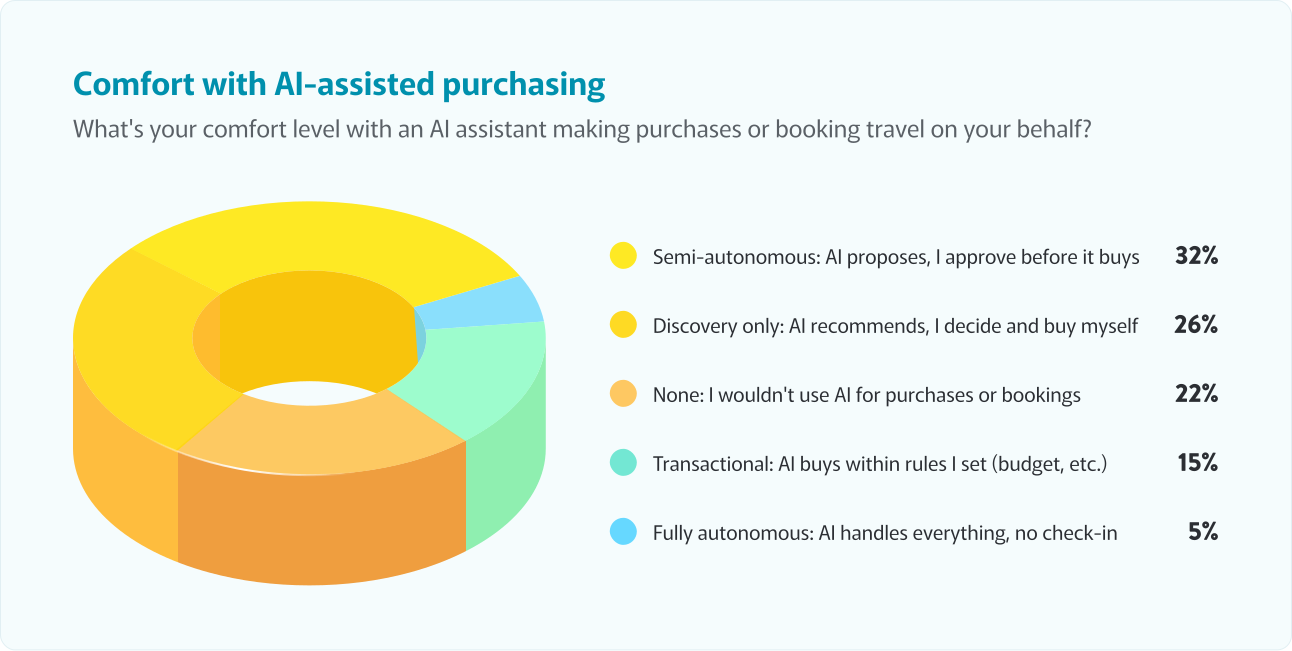
For travel platforms building or adopting AI booking assistants, this checkpoint builds a kind of trust that turns a one-time booking into a returning customer, but it requires investing in protection infrastructure capable of supporting AI-powered recommendations.
What travel companies should do next
Travelers want protection delivered without friction. To meet this demand, travel platforms should:
- Make protection a default loyalty benefit to attract younger customers and keep older ones
- Simplify the list of coverage offered by prioritizing emergency medical and trip cancellation protection benefits
- Prioritize automatic payouts ahead of other claims improvements
- Position AI as an assistant that recommends personalized coverage, so travelers can still make the final purchase decision
- Ensure their booking platforms can support adding new features
Travel platforms don’t have to build the underlying infrastructure for this on their own. Cover Genius already handles the embedded protection layer behind travel bookings, from coverage to claims to compliance, so platforms can focus on the booking experience itself. A single integration lets you run automatic payouts, surface consumer-specific offers, and provide parametric protection products without building a new stack for every new cohort.
Wondering how to get started? Learn more about Cover Genius for travel.
Related Articles
Consumers trust their banks the most when purchasing protection. Why aren’t banks taking advantage?
Deblock and Cover Genius Partner To Build Protection Into Everyday Banking
What Is Parametric Insurance? Definition, Examples, and How It Works
Get in touch
All we need is some quick background info to understand how we can best help.