
The 2026 Embedded Protection Market Research Report
Bancassurance Market Report: Trends Shaping Bank-Distributed Protection
- 15 min read
IN THIS ARTICLE
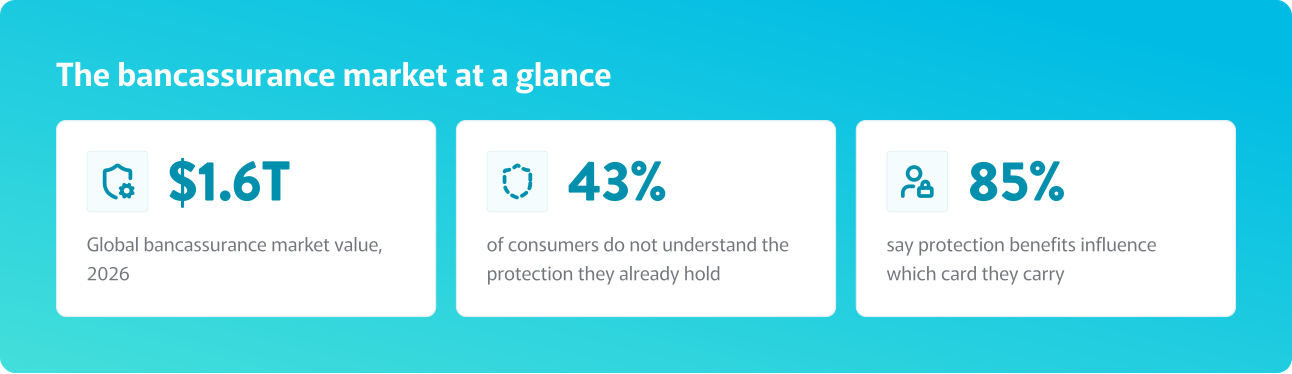
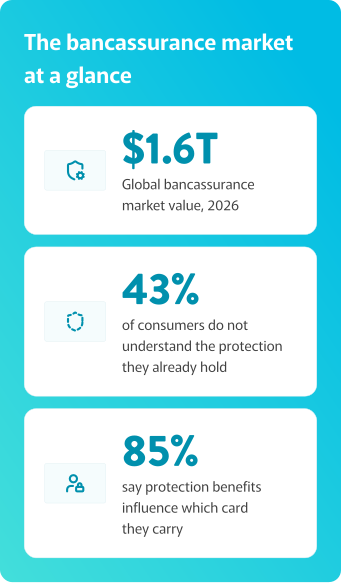
The bancassurance market is one of the largest distribution channels in financial services, valued at roughly $1.6 trillion today and forecast to approach $2.5 trillion by the mid-2030s. Banks already hold the three things that make protection sell: the account, the card, and the transaction data. The 2026 Embedded Protection Market Research Report, published by Cover Genius and Gather, found that consumers trust banks to sell them protection more than any other channel.
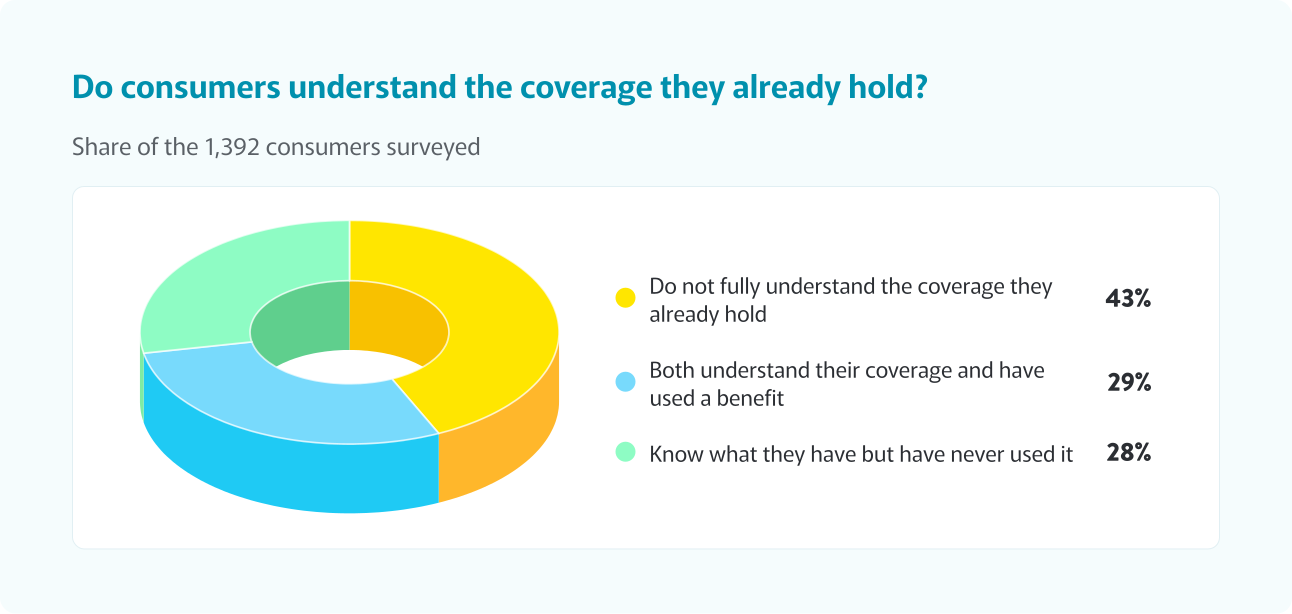
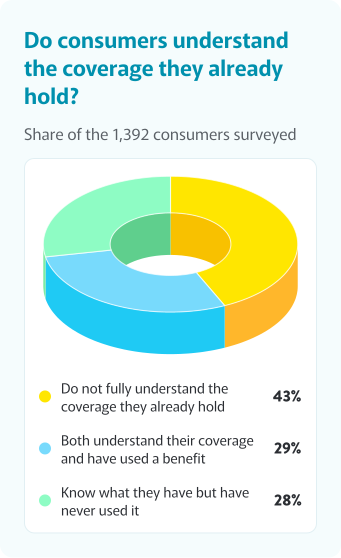
Most banks have not put that advantage to work. In the same study, 43% of consumers said they do not fully understand the coverage they already hold, and 16% of bank customers did not know their bank sold protection at all. Banks are paying for benefits their customers cannot see, in a market where the older revenue engines are being regulated and repriced out from underneath them.
This report maps the numbers behind the bancassurance market, the margin pressure forcing the shift, the consumer evidence on what people want, and why a bancassurance partnership reaches revenue faster than an in-house build.
The bancassurance market in numbers
Bancassurance is the default distribution model for protection across much of the world, which makes its size the starting point for any conversation about where bank-distributed protection goes next.
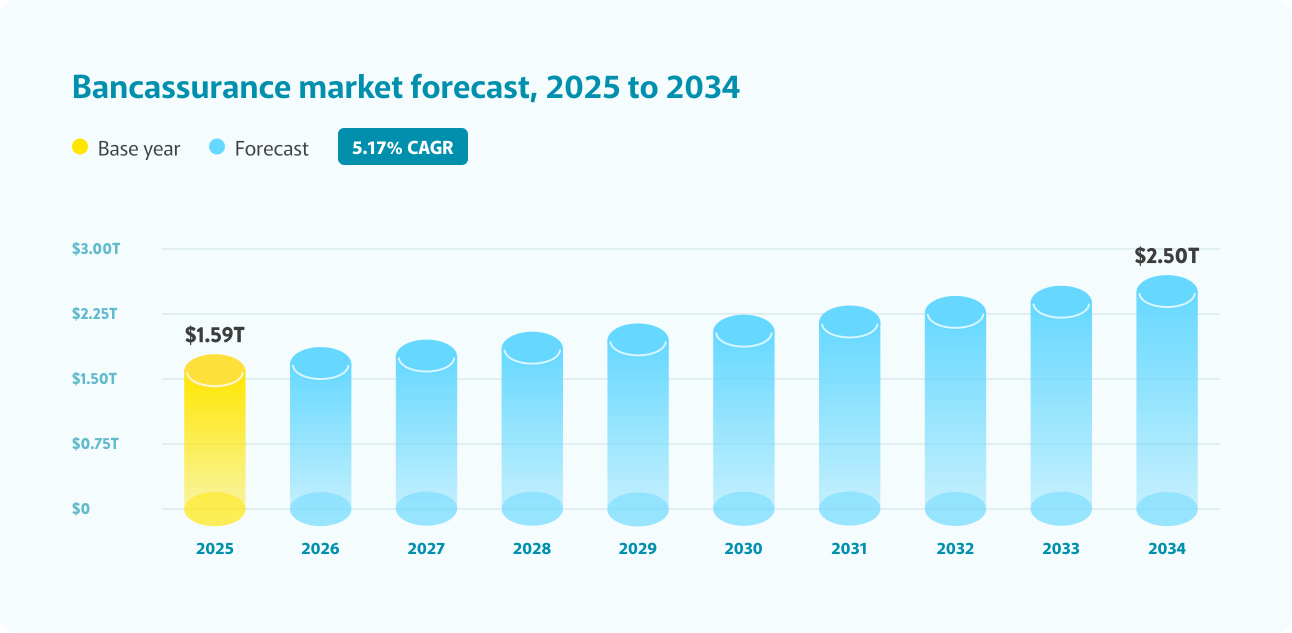
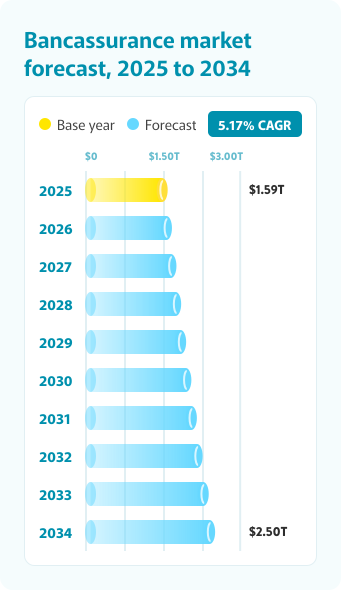
IMARC values the bancassurance market at $1.59T in 2025, reaching $2.50T by 2034, a compound annual growth rate (CAGR) of 5.17%. That is roughly $900B of new value inside a decade, added to a base that is already one of the largest distribution channels in financial services.
Bancassurance spans everything a bank has ever distributed, from life, health, and credit cover to mortgage, motor, and commercial lines, much of it sold at a branch counter over decades. The part growing on digital rails is narrower and more specific.
Dataintelo puts protection embedded into banking, sold through the app and the card rather than referred out, at $52.4 billion in 2025, reaching $148.7 billion by 2034 at a 12.3% CAGR. That is the market a bank moves into when it starts offering embedded protection itself instead of passing customers to an outside protection provider. A bank’s transaction data already shows when a customer needs coverage. Selling that coverage in-house builds loyalty instead of handing the relationship to someone else.
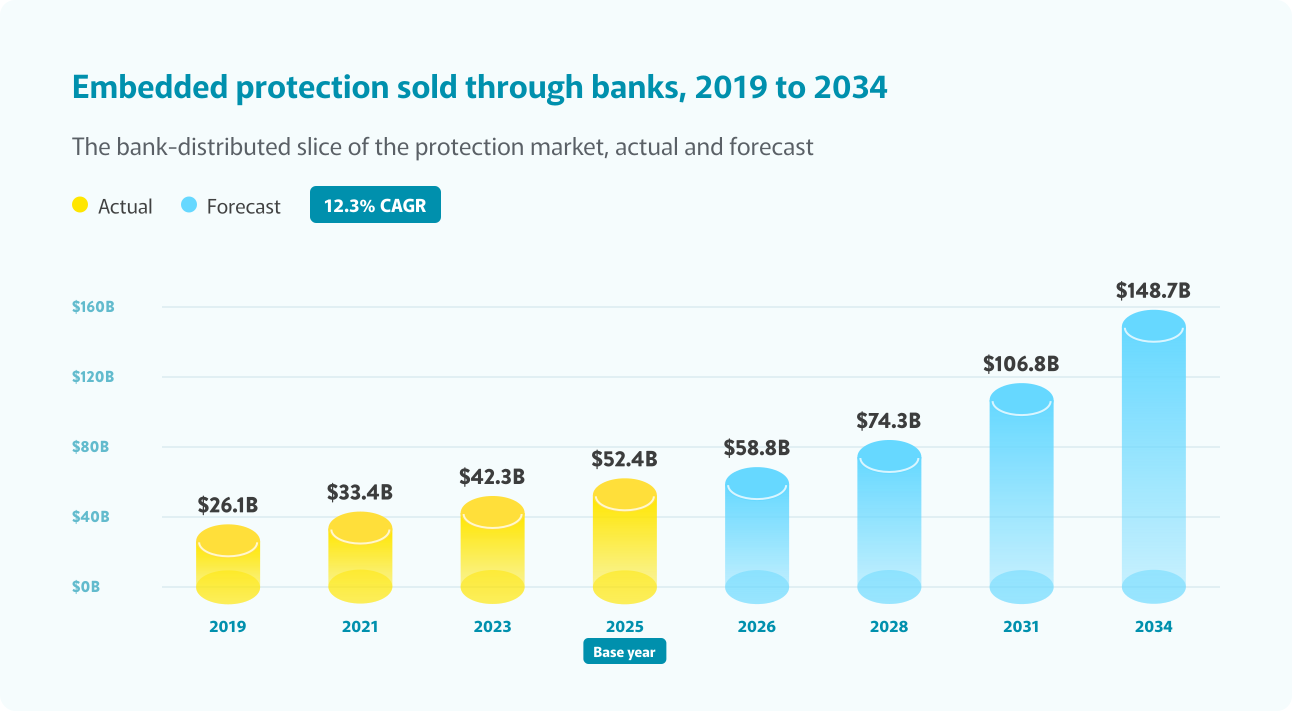
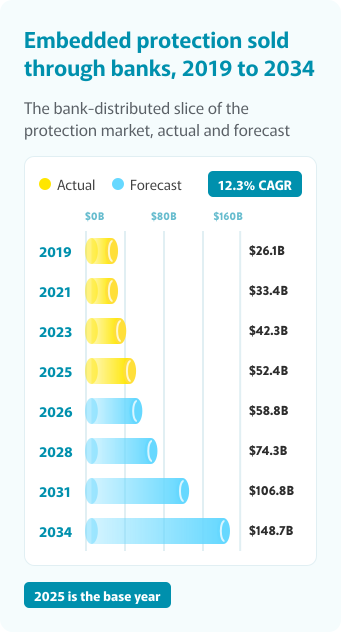
That $52.4 billion is one slice of a larger market. SkyQuest sizes embedded protection across all industries, not only banking, at $194.9B in 2025, reaching $1.03T by 2033 at a 23.1% CAGR. It grows faster than the bank figure, and it includes business a bank cannot sell, because it counts protection attached at retail and travel checkouts as well. For a bank, $52.4 billion is the number to plan from.
Why bank revenue is under pressure
The reason bancassurance is back on strategy agendas has less to do with insurance and more to do with what happened to the two revenue lines banks used to rely on.
Net interest margin stopped doing the work
Most of what a bank earns comes from the gap between two numbers. It pays savers to keep their money on deposit, and it charges borrowers more for loans and credit. Measured against everything the bank has lent out, that gap is its net interest margin. It is the engine of retail banking.
That engine ran hot when central banks raised rates through 2022. Banks repriced loans upward almost immediately and were much slower to raise what they paid savers, so the gap widened. Net interest margins peaked in late 2022 and were still declining through 2023, according to the FDIC’s Quarterly Banking Profile.
Now both sides of that gap are moving the wrong way. Rates have stopped climbing, so what a bank earns on each loan has flattened. Competition for deposits has not stopped, so what it pays to win each one keeps rising.
As of September 2026, major US banks were offering between $300 and $325 as a one-off bonus to open a checking account, on top of the interest they pay on the balance itself. Earning less on the lending side while paying more on the deposit side narrows the gap.
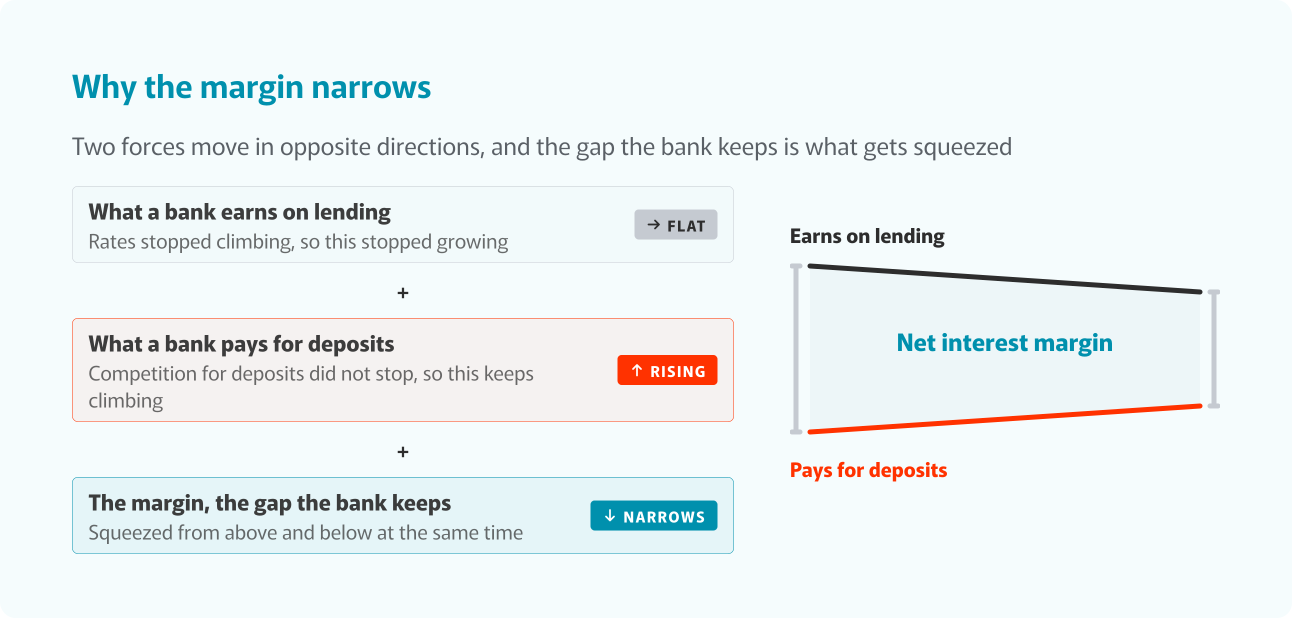
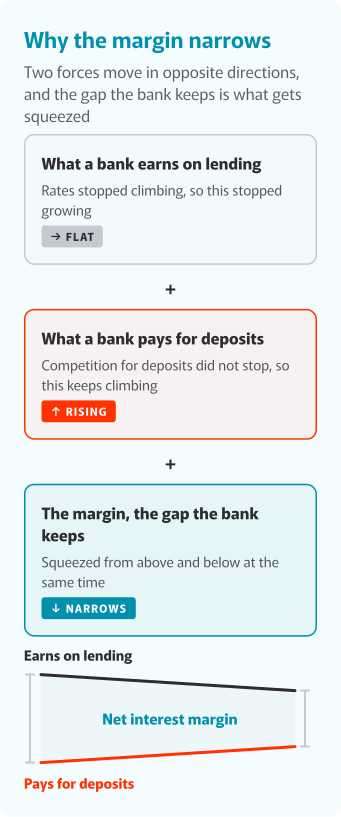
What decides whether a drop like that stings or hurts is how much of the bank’s income comes from somewhere else. A bank earning substantial fees from other products absorbs it. A bank earning almost everything from the interest gap has just watched its only engine slow down.
Interchange moved from risk to reality
The other revenue line is interchange, the fee a bank collects every time one of its cards is used. The merchant’s bank pays it to the card issuer out of the sale, so the customer never sees it and the merchant absorbs it as a cost of accepting cards. Fractions of a percent on a single coffee, but on billions of transactions it built the revenue that paid for free current accounts, cashback, and airport lounges.
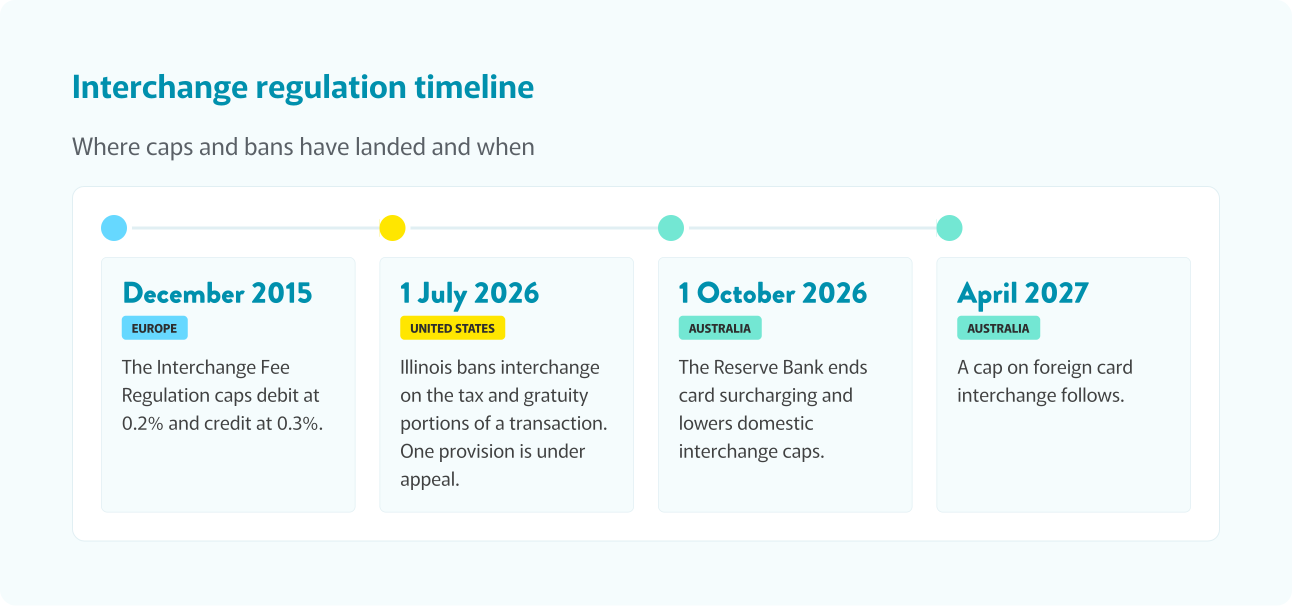
Regulation is now dismantling it, and the timeline is no longer theoretical. Most bancassurance news that matters to a protection strategy now comes from regulators rather than from deal announcements.
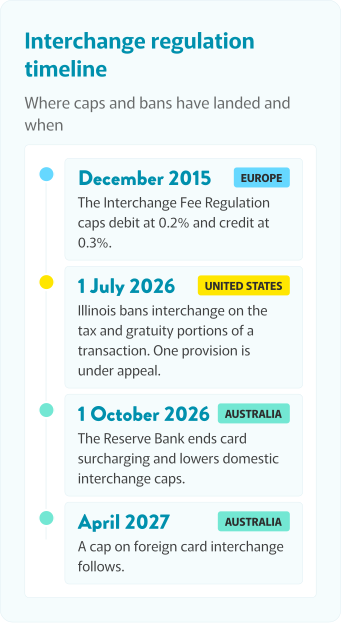
In Europe, the Interchange Fee Regulation capped consumer debit interchange at 0.2% and credit at 0.3% of transaction value, in force since December 2015. It set a template other jurisdictions have since followed.
In the United States, the Illinois Interchange Fee Prohibition Act takes effect on July 1, 2026, banning interchange on the state and local tax and gratuity portions of a transaction, though one provision is enjoined for national banks and under appeal.
In Australia, the Reserve Bank’s 2026 reforms end surcharging on debit and credit cards and lower interchange caps on domestic transactions, from October 1, 2026. A cap on foreign card interchange follows in April 2027.
The pattern is consistent across all three jurisdictions. The revenue that historically subsidized free banking and premium card benefits is being capped, banned, or competed away.
The pattern is consistent across all three jurisdictions. The revenue that historically subsidized free banking and premium card benefits is being capped, banned, or competed away.
Why banks are turning to embedded protection
Neither of those pressures is cyclical. Deposit costs respond to competition for funding, and the interchange caps are written into legislation. Waiting them out is not a strategy. That moves fee income from something a bank builds when it has spare capacity to something it builds because the alternative is a shrinking margin on a growing customer base.
Replacing that income means adding products, and most of the obvious candidates carry a cost of their own. Lending more requires holding more capital against the risk. Acquiring a business brings integration work and execution risk. Raising fees on the core account tests the very thing that won the customer.
Embedded protection asks for none of that. Regulators require a bank to hold its own money in reserve against the risks it takes, and money sitting in reserve cannot be lent or invested elsewhere. Embedded protection sits outside that requirement, because the carrier holds the risk and therefore holds the reserves. The bank earns a fee for putting the coverage in front of the right customer at the right moment, and sets nothing aside to do it.
It also runs on assets the bank already owns and mostly leaves idle. The account shows what a customer can afford. The card shows what they buy. The transaction history shows when they are exposed, whether that is a flight booked, a phone replaced, or a deposit paid on a rental. Cover Genius and Gather research found banks are the most trusted place consumers would buy protection, ahead of both traditional protection providers and the platforms competing for the same sale.
The pieces are already there. That invites a fair challenge, because banks have been selling protection for decades. What they have not been doing is selling it in a way that uses the account, the card, or the data. Most are still running an arrangement built for a branch network and a paper claim form, and that arrangement is the thing holding the opportunity down.
The problem was never whether a bank offers protection. It is how.
What separates bancassurance from bancassurance 2.0
For most of its history, bancassurance was a referral arrangement. The bank put an insurance company’s product in front of its own customers, at the branch counter or in the small print of a card agreement, and took a commission when one sold. The insurance company underwrote the cover, owned the policy, and handled the claim. The bank supplied the customers and not much else.
That model has not aged well, and the reason is specific. It pays once and builds nothing. The bank carries the cost of distribution and the blame when a claim goes badly, while the recurring value of the policy sits with somebody else. The bank also learns nothing from the product, because every signal about what the customer bought, used, or claimed on lands outside the building.
Bancassurance 2.0 changes what the bank is actually selling. Protection becomes a layer of the banking product itself, surfaced against transaction data at the moment of relevance, with claims resolved inside the bank’s own experience. Protection sold through the bank’s own channel pays a share of the premium for as long as the customer stays covered, and the bank sells more policies, because the offer arrives when the transaction says it is relevant rather than when a customer happens to ask.
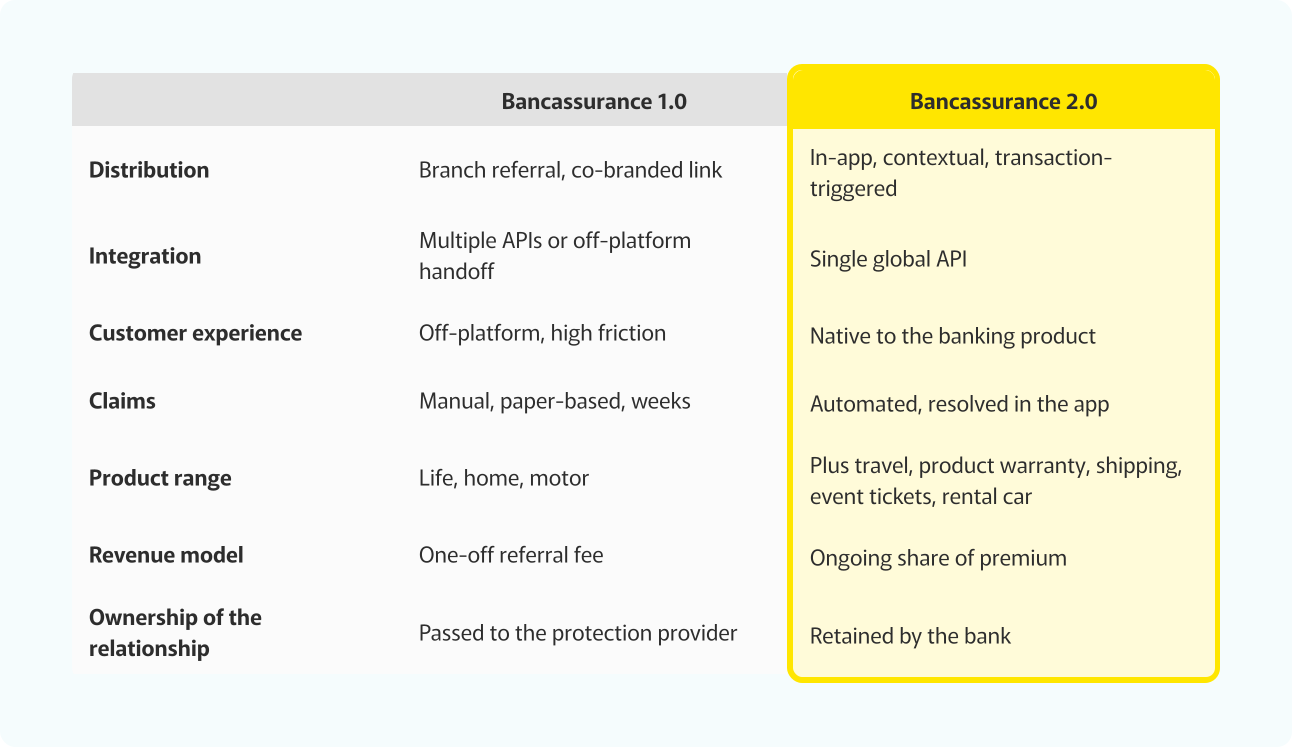
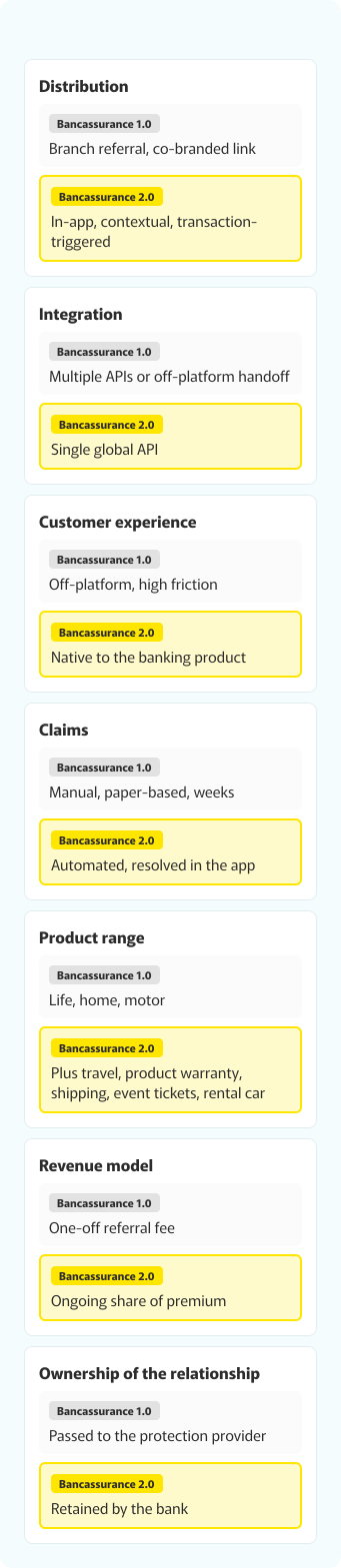
The first bancassurance model treats protection as a product the bank sells. Bancassurance 2.0 treats protection as a feature the bank runs. Only the second one compounds.
Consumers are ready. Banks have not shown up.
In a survey conducted by Cover Genius and Gather across 1,392 consumers, banks came out as the most trusted place consumers would buy protection, ahead of both traditional protection providers and booking platforms. Then the same study showed how little of that trust is being converted.
43% of consumers do not fully understand the coverage they already hold. Only 29% both understand their coverage and have used a benefit. Another 28% know what they have but have never used it, which is a pool of paid-for value sitting unclaimed on the bank’s balance sheet.
Among 518 banking customers who did not fully understand the protection already on their card, roughly one third said they would consider buying protection from their bank but never have. A further 16% did not know their bank sold protection at all. That is addressable demand sitting inside the bank’s own channel, unserved.
Source: https://covergenius.com/resources/reports/2026-embedded-protection-report/
Clarity is a pricing lever. Consumers who understand what their protection covers will pay a 25% premium for it. TBanks that explain protection plainly will win before they compete on price.
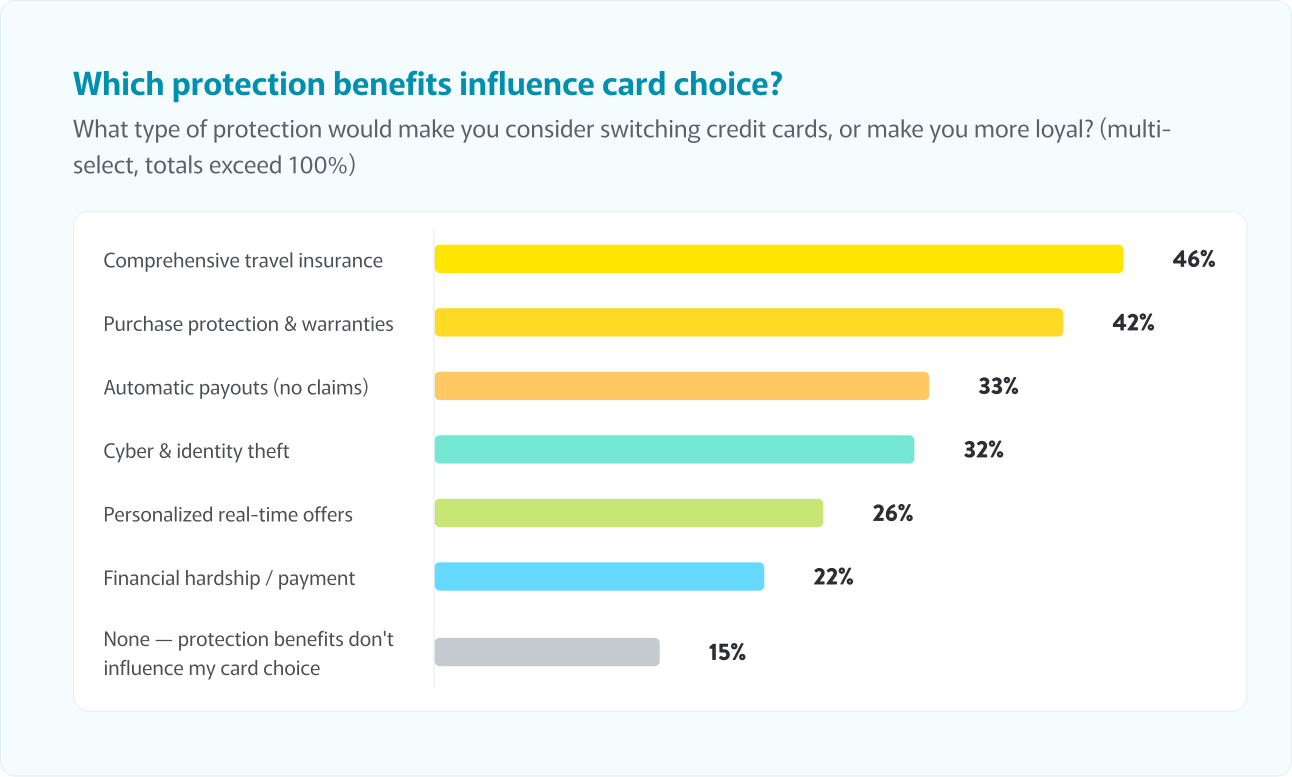
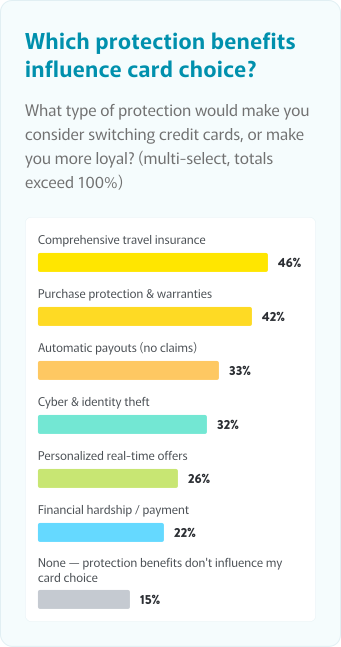
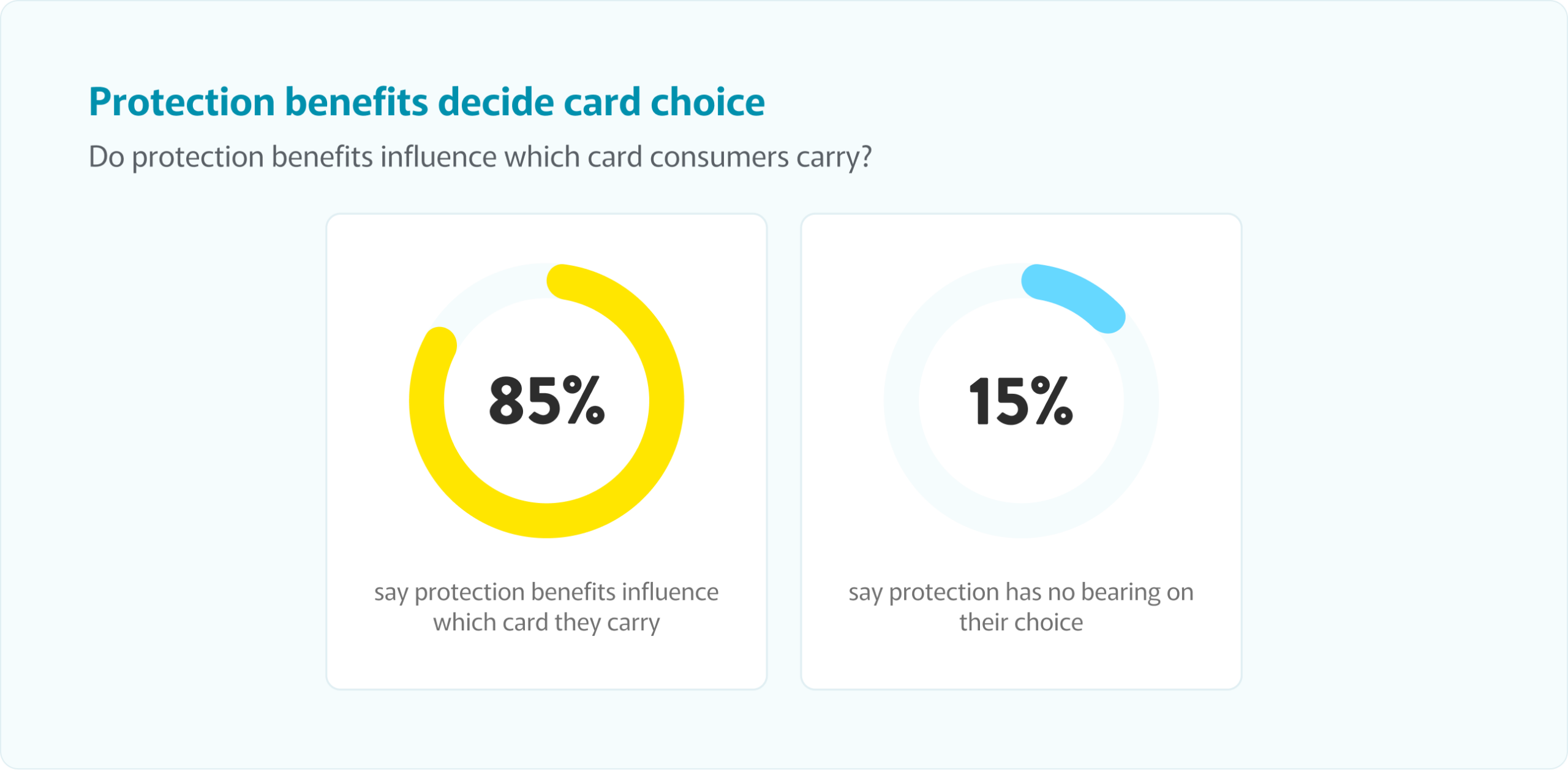
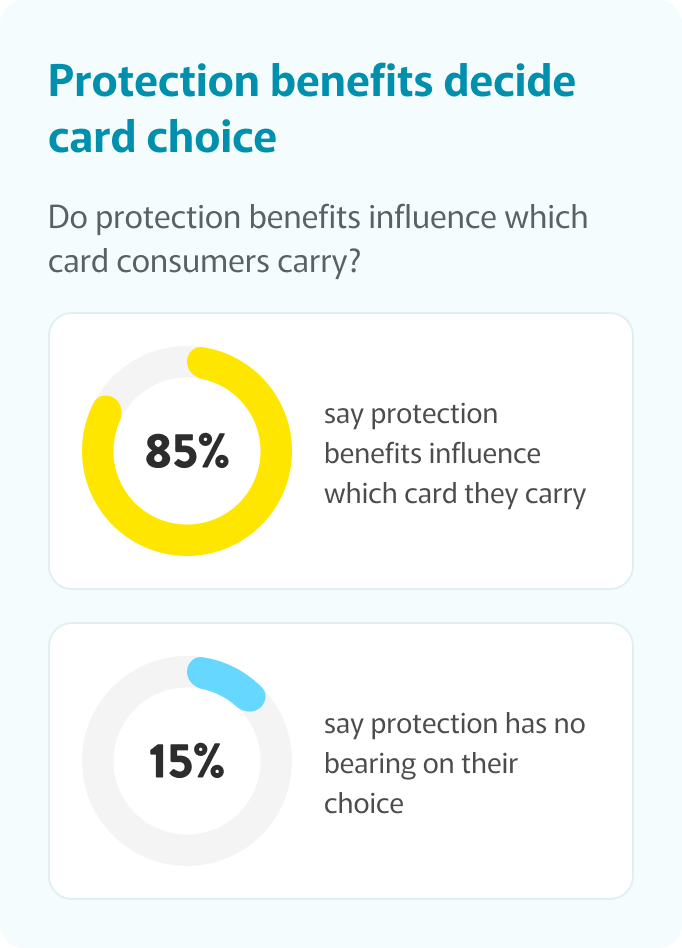
Protection benefits already decide card choice. 85% say these benefits influence which card they carry. Only 15% said protection has no bearing on their choice. Protection spend is a retention investment that most banks currently account for as a cost.
Two more findings change how a program should be designed rather than just how it should be marketed:
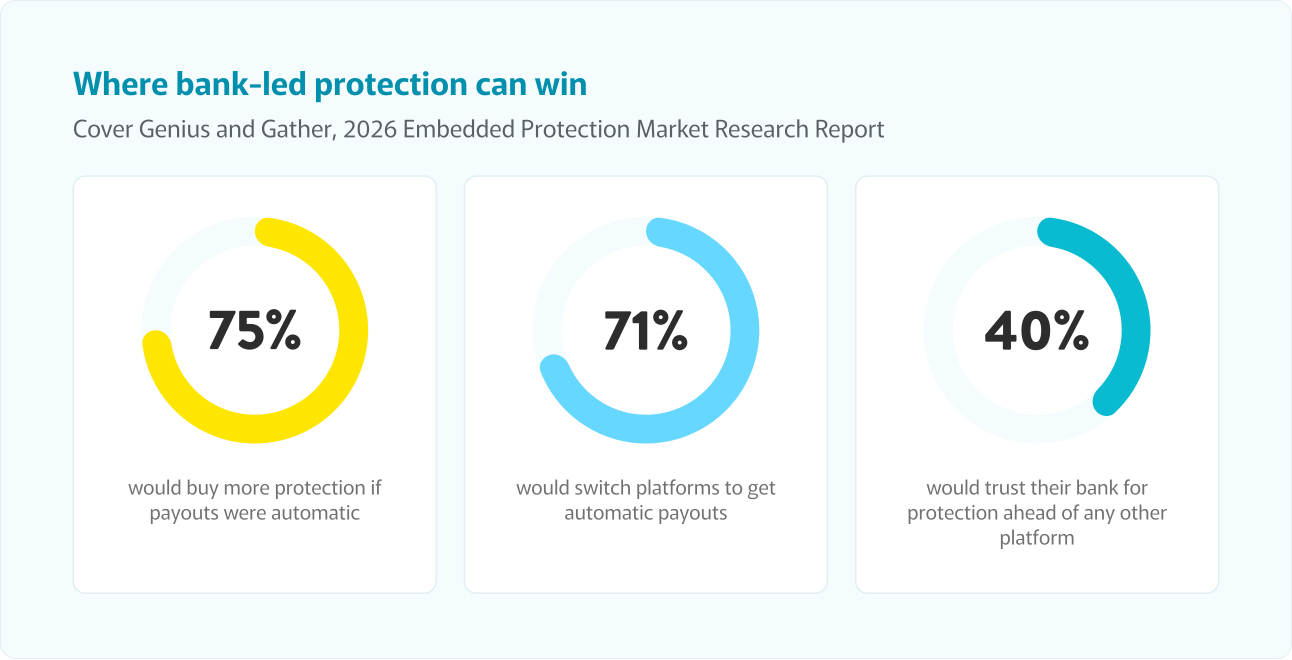
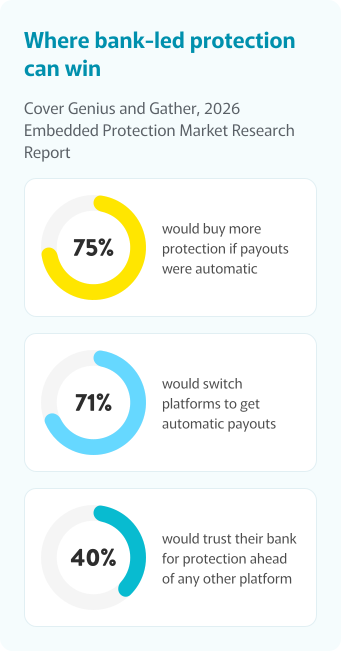
Automatic payouts are the strongest purchase driver tested. 75% would buy more protection if payouts were automatic, and 71% would switch platforms to get it. The claim is where protection most often fails the customer, and removing the claim form outperformed price, brand, and every other lever in the study.
There is a generational split in who to launch to as well. Millennials already buy protection through their bank at higher rates than any other cohort, which makes them the easiest group to expand. Boomers trust banks most and are almost entirely untouched, a large pool waiting on a visible, simple offer. Product preference splits too. Interest in cyber and identity protection climbs with age, from 26% among Gen Z to 41% among Boomers, where it outranks every other benefit, while device theft leads in every generation.
No additional cost protection, and what it is actually for
No additional cost (NAC) protection is coverage bundled into a card or account as standard, at no separate charge to the customer. Travel insurance on a premium credit card is the version most people have encountered, historically funded by interchange.
As interchange is capped, traditional issuers are cutting these benefits and replacing them with points. The points earn against spending and can only be redeemed inside the bank’s own catalog, at a rate the bank sets, and a large share are never redeemed at all. That makes them far cheaper to run than protection. It also swaps something that pays out in the real world for something that only pays out in the bank’s shop, at exactly the moment the research says protection benefits are deciding card choice for 85% of consumers.
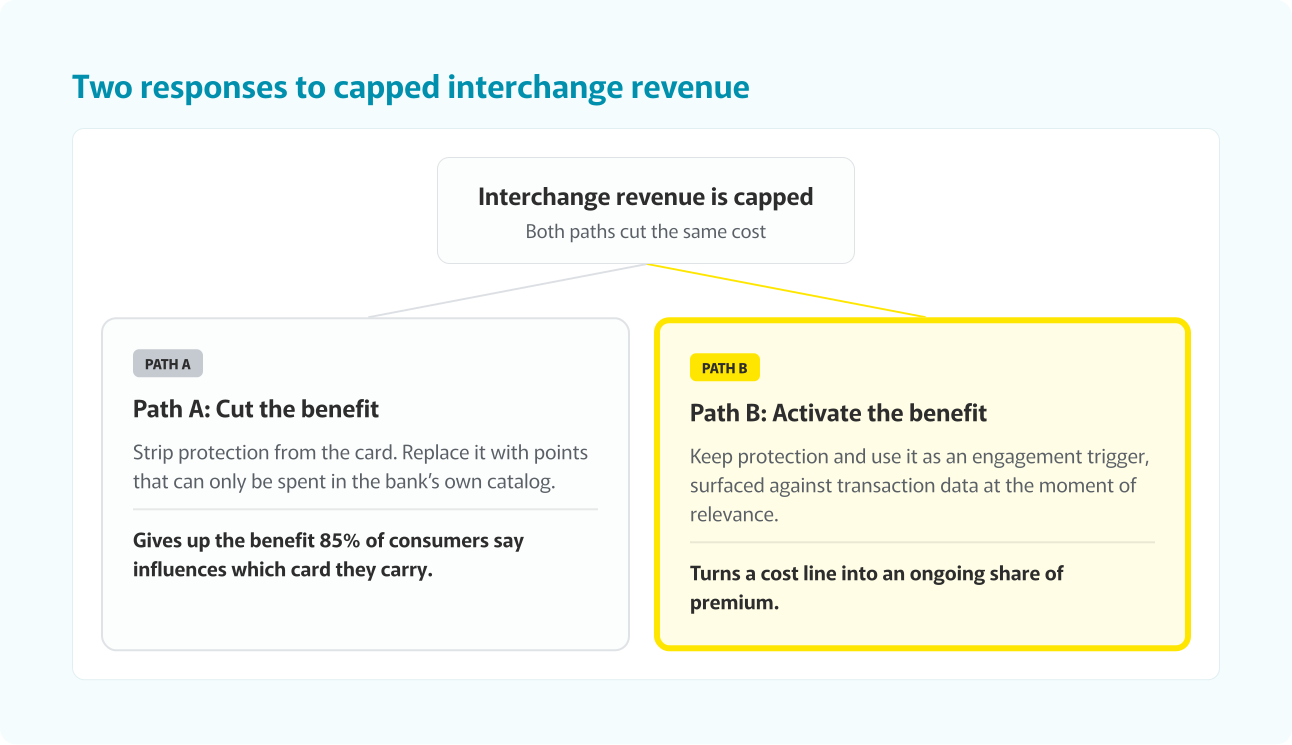
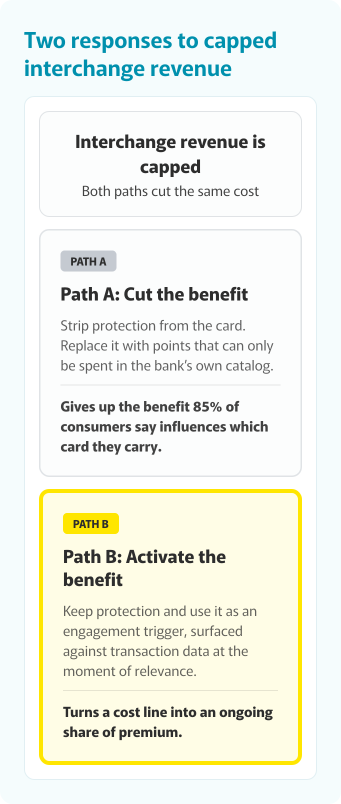
The strategic response is the opposite, and it starts from understanding the purpose of NAC programs. The value is in the communication that the policy makes possible.
A bank that monitors transactions can tell a customer, in the moment, that the flight they just booked is covered. That single notification converts a line in a product disclosure statement into a visible benefit. It also gives the bank a reason to appear in the customer’s day that is not a marketing message.
The pattern runs in three stages.
Awareness
Transaction data triggers a message confirming the specific purchase is protected. The perceived value of the account rises without any change to the underlying product.
Proof
When something goes wrong, the claim is settled inside the app rather than through a form and a wait. A $100 payout on a cracked screen, handled in minutes, does more for trust than any campaign.
Retention
A customer who has had a claim pay out has a concrete reason to keep the card in their wallet, which is the outcome the consumer research points to when it finds that protection benefits influence card choice. This is where protection earns back what it costs. The premium tier and the higher coverage limit also become easier to sell to that customer, though the return does not depend on them.
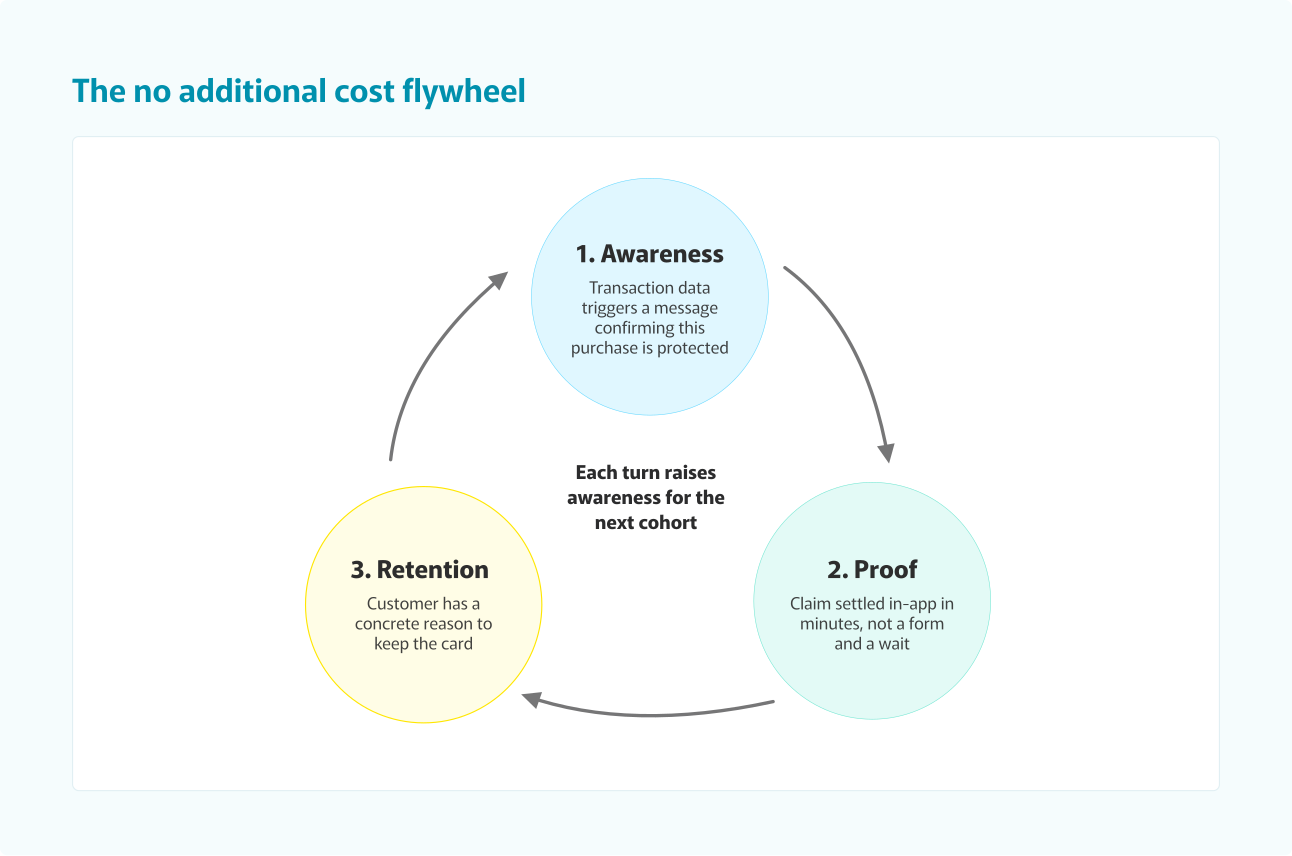
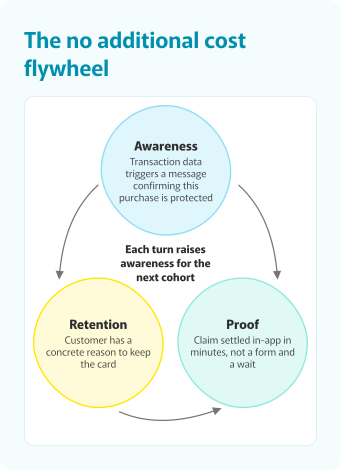
NAC stops being a cost center at stage two and becomes a retention investment at stage three.
Why a bancassurance partnership beats an in-house build
Banks have spent the last decade rebuilding themselves as software companies. Core banking moved off the monolith, payments and lending moved onto APIs, and both now ship new products at close to zero marginal cost.
Protection is the exception, and it is the exception at almost every large bank.
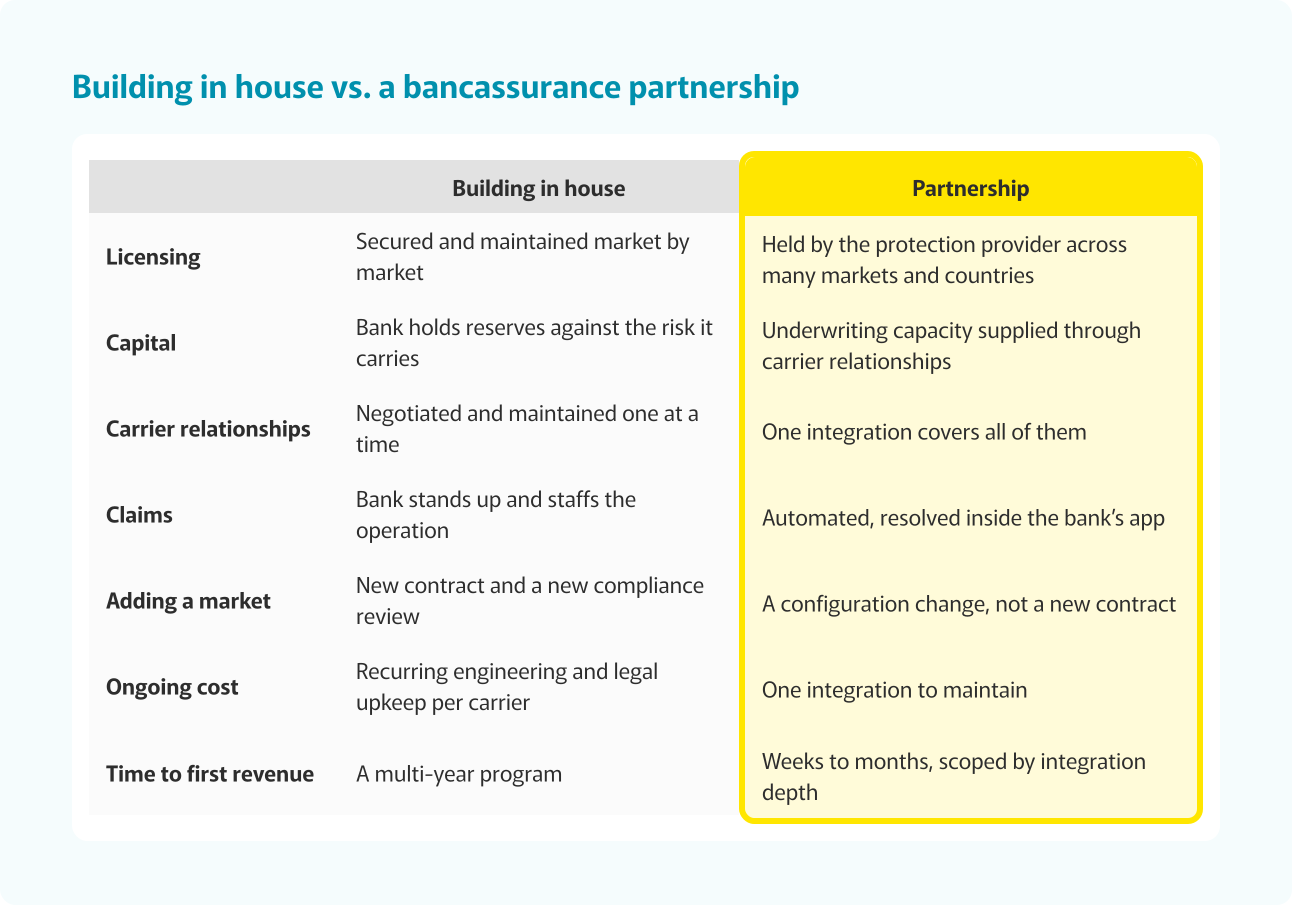
Protection at most banks still runs through a patchwork of carrier relationships, each with its own contract, its own integration, and its own compliance review. That produces an asymmetry visible on any product roadmap. A bank that can launch a new financial product in a single sprint can still need months of legal and engineering work to add one protection product in one market.
The penalty compounds with expansion. A checking account is configured once and rolled out across every region the bank operates in. Protection cannot be, because each carrier relationship is negotiated and compliance-reviewed market by market. Banks that grow into new countries tend to accumulate a separate protection program in each one, with its own contract terms, its own claims process, and its own engineering surface to maintain.

Source: https://covergenius.com/resources/reports/2026-embedded-protection-report/
What the partner is actually for
The partner supplies the parts that are slow and expensive to build, from licensing and regulatory coverage across markets to underwriting capacity through carrier relationships, policy administration, and automated claims handling. The partner also runs the pricing and personalization experiments that decide which offer is surfaced against which transaction.
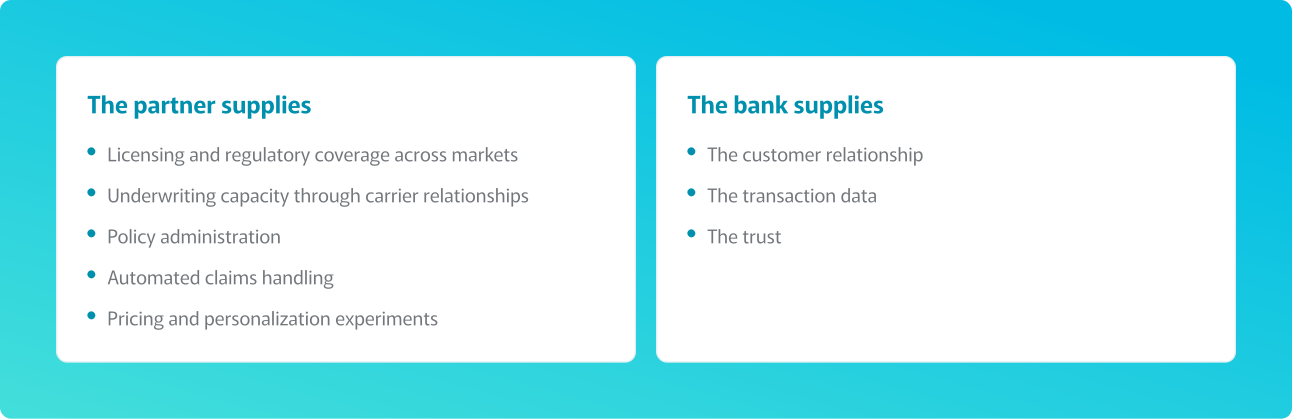
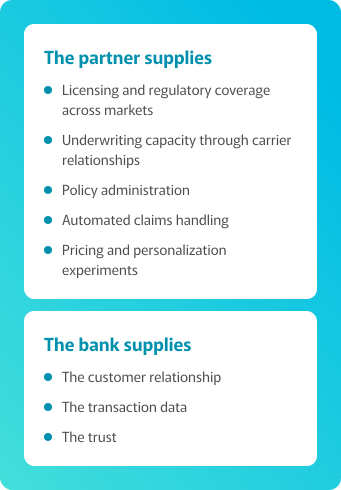
The bank supplies what no partner can replicate. The customer relationship, the transaction data, and the trust. That last one is measurable, and it is why the trade works in the bank’s favor. In the Cover Genius and Gather survey, 40% said they would trust their bank for protection ahead of any other platform, including dedicated insurance companies.
What changes operationally is that protection starts behaving like the rest of the bank’s product line. A single API replaces the carrier-by-carrier integration work, so a product team can deploy and test a new protection line without writing new code or reopening a carrier contract.
The claims question
Claims decide whether the program builds trust or damages it. This is the part of the experience most likely to be judged by the customer as a reflection of the bank, regardless of who underwrites the policy. The consumer research is direct on this point, with 75% saying they would buy more protection if payouts were automatic and 71% saying they would switch platforms to get it. A program that routes claims into a legacy process undoes the work the rest of the program did.
What this means for banks
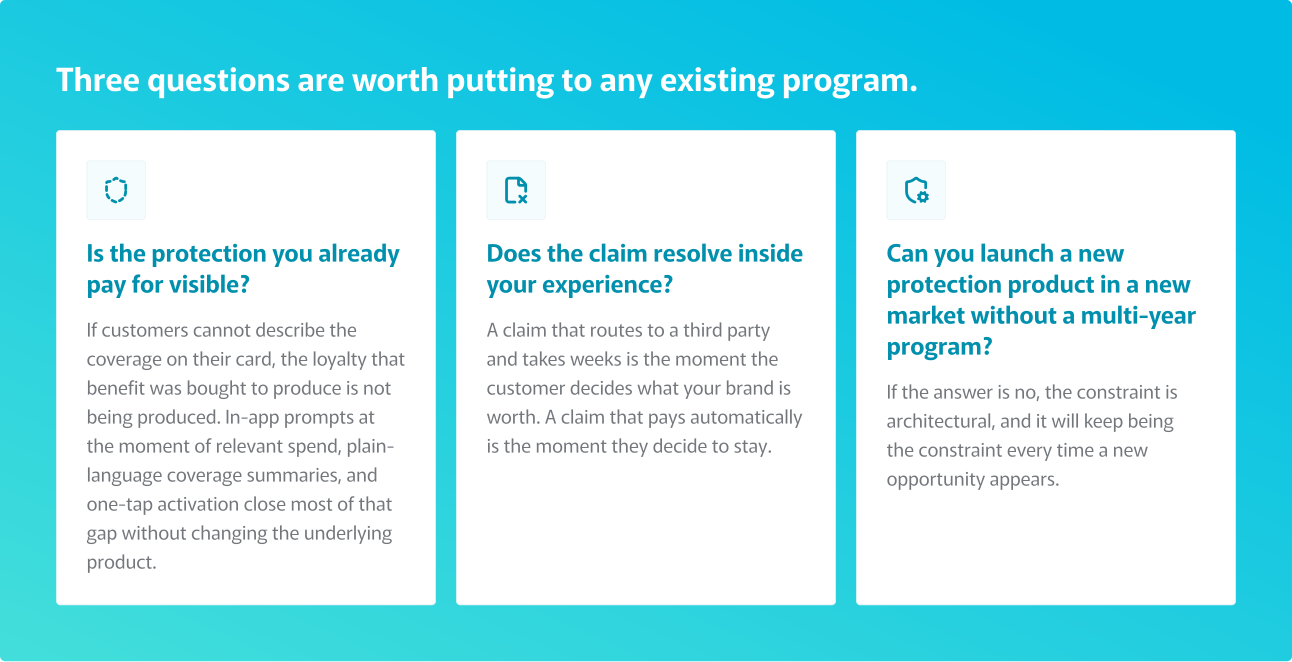
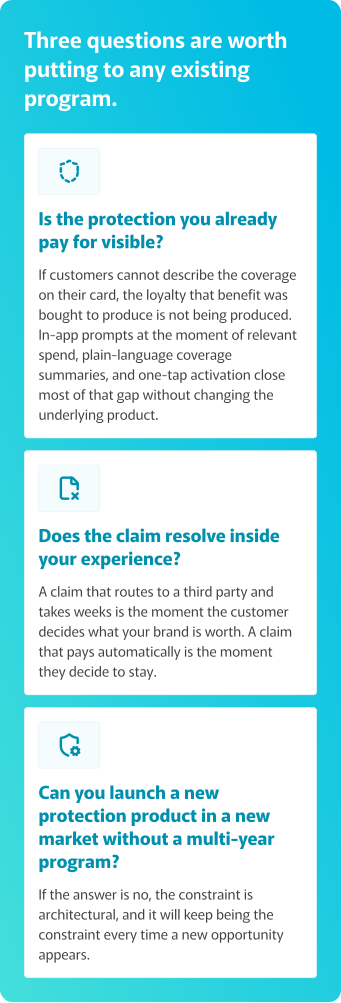
Every finding in this report points at the same conclusion, which is that the constraint in bank-distributed protection is not demand and has not been for some time. Consumers trust banks with protection more than they trust anyone else. They will pay a premium for coverage they understand. They will change providers for a claim that pays automatically. The constraint is execution.
Source: https://covergenius.com/resources/reports/2026-embedded-protection-report/
Banks and payments platforms hold the strongest starting position of any channel in the protection market. They have the account, the card, the data, and the trust. The work is turning that position into something the customer can see.